Licensed and Insured
DLD Home Improvements is fully licensed and insured for tree removal work. Tree work on an uninsured contractor's watch creates real exposure for you as a property owner, and that's not a risk worth taking.
Services
DLD Home Improvements handles tree removal for residential and commercial properties across Connecticut, Springfield MA, and Albany NY. Whether you're dealing with a hazardous tree, storm damage, or land clearing for a project, we get it done safely and completely, with full debris removal and site cleanup included.
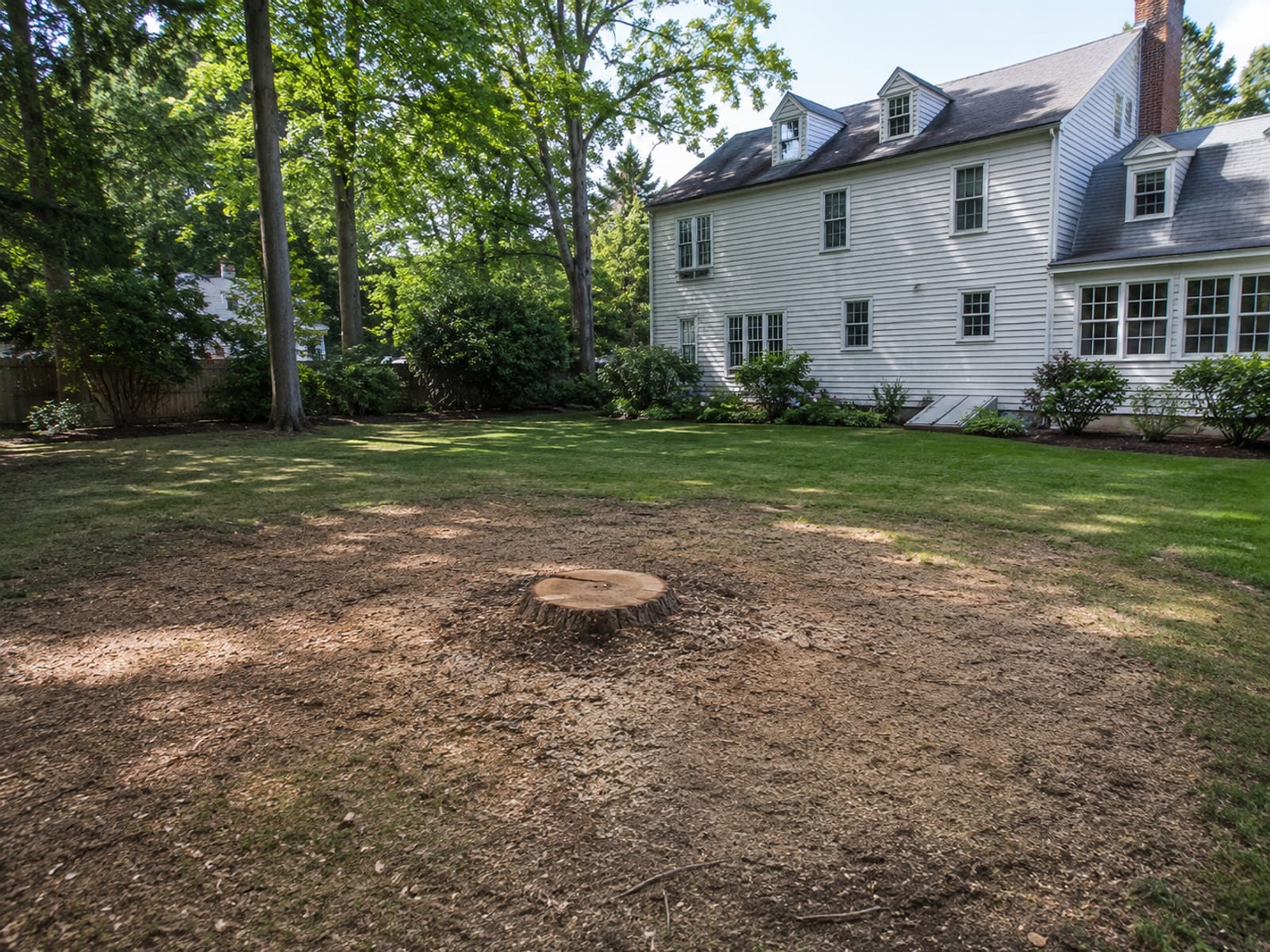
Tree removal is the full process of cutting down a tree, removing it from your property, and clearing the debris so your yard or job site is clean when we leave. At DLD Home Improvements, a typical removal covers the takedown itself, hauling away the wood and brush, and leaving the area ready for whatever comes next, whether that's a new fence line, a landscaping project, or simply reclaiming your yard.
Trees come down for many different reasons. Some are dead or dying from disease, some have been damaged by storms, and some are simply in the wrong place for a construction or renovation project. Whatever the situation, the work follows the same standard: assess the tree, plan a safe removal method, execute the cut, and handle the cleanup. Most residential removals are completed in a single visit.
This region has seen a real increase in tree removal needs over the past several years. Emerald ash borer infestations, beech leaf disease, and spongy moth damage have killed or severely stressed millions of trees across the region. A dead or weakened tree doesn't fall on a predictable schedule, and the longer it stands, the more risk it creates for structures, vehicles, and people nearby. Getting it down before it becomes an emergency is almost always the smarter call.
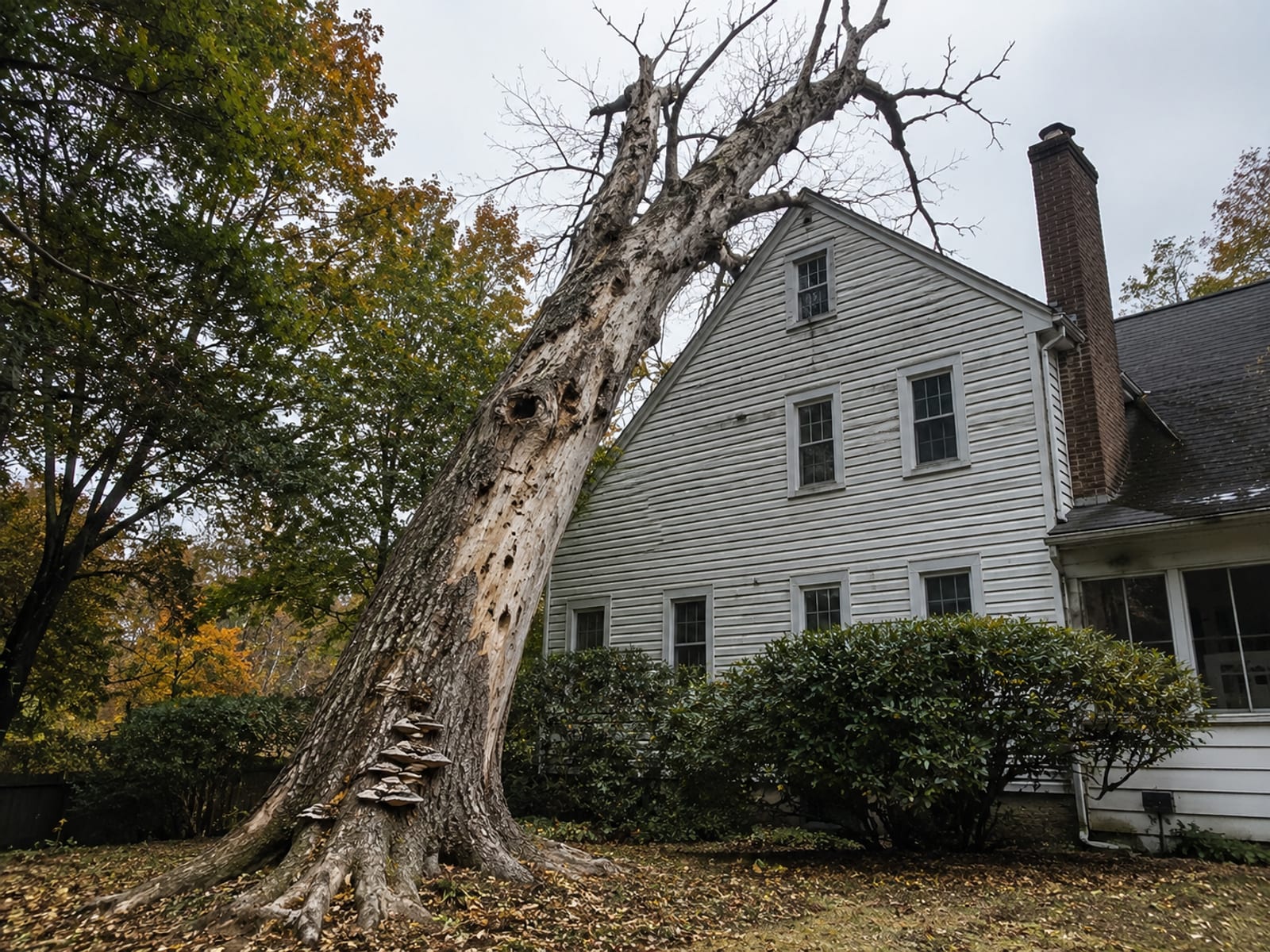
The most common reason property owners call for tree removal is safety. A tree that's dead, heavily leaning, or structurally compromised by disease or storm damage is a liability. It can come down in a wind event, drop major limbs without warning, or slowly fail at the root level and topple with no notice at all. If a tree is showing signs of serious decline, having it professionally assessed and removed is the responsible move.
Beyond safety, there are plenty of practical reasons to remove a tree. Root systems lifting driveways, cracking foundations, or invading sewer lines are a common issue on older properties throughout the area. Trees too close to structures create ongoing maintenance problems and can cause moisture damage to siding and roofing over time. When you're adding a fence, expanding a driveway, doing a commercial build-out, or clearing land for new construction, removing select trees is often one of the first steps in the project.
For commercial property managers and building owners, the calculation is a little different. A hazard tree on a commercial property isn't just a maintenance issue; it's a liability exposure. Facilities directors managing multiple sites across the region are often dealing with aging tree inventories that haven't been systematically addressed. Working with a contractor who can handle multiple locations and manage the job start to finish makes a real difference in how efficiently that work gets done.
Every removal follows a clear sequence so nothing gets missed and the site is left clean.
Before any cutting starts, the tree and its surroundings get a thorough look. We check the tree's condition, the lean, what's nearby, and how to get equipment in and out. This step determines the safest removal method and catches anything that needs a different approach, such as a tree close to a structure or power line.
In Connecticut, most municipalities require permits for removing trees over 8 to 12 inches in diameter, and properties near wetlands have additional requirements with buffer zones typically running 50 to 100 feet from the wetland edge. We confirm what's required for your specific town before work begins so you don't run into compliance issues after the fact.
The actual removal is done in sections or as a full fell depending on what the site allows. Tight spaces, nearby structures, and overhead utilities all factor into which method makes the most sense. The goal is a controlled process that keeps the surrounding property intact.
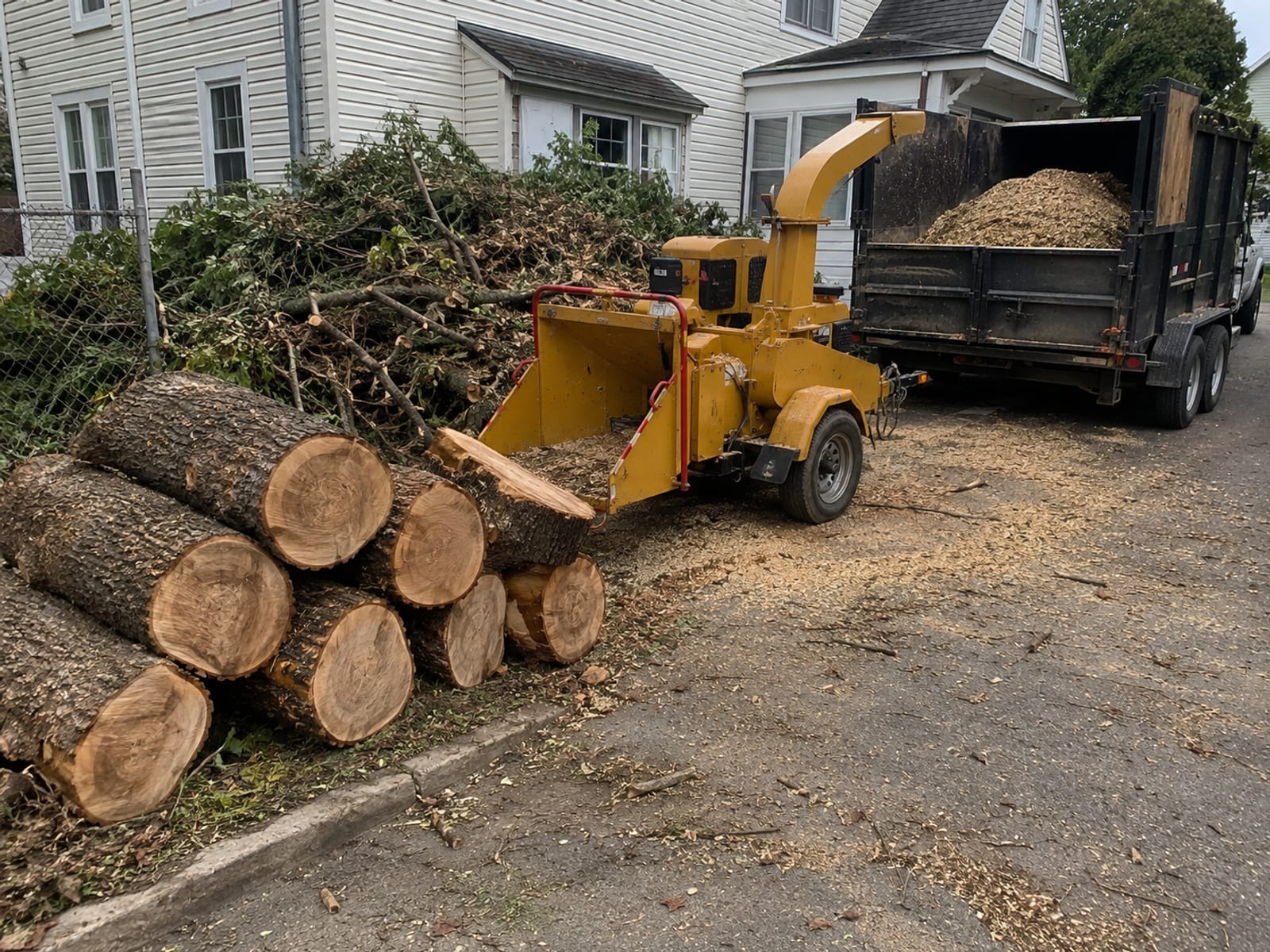
Once the tree is down, the wood, limbs, and brush get loaded out. We don't leave piles for you to deal with. If you want firewood lengths kept on-site, say so at the start and we'll work around that, but the default is a clean site.
The final step is leaving the area clean and ready. That means raking out debris, clearing any mess from the removal process, and making sure the space is usable. For commercial sites, that includes returning access areas and nearby surfaces to the condition we found them.
The short answer is: it depends on where you are, what the tree is, and why it's coming down. Each state has its own rules, layered on top of whatever your individual municipality requires. Getting it wrong can mean fines or having to undo work you've already paid for.
In Connecticut, dead or genuinely dangerous trees generally don't require a permit, but removing a healthy tree above a certain size requires one in most towns, with the threshold typically set at 8 to 12 inches in diameter. If your property is near inland wetlands or a watercourse, Connecticut's inland wetlands agencies regulate activity within buffer zones that typically extend 50 to 100 feet from the wetland edge, and tree removal inside those zones requires separate approval. Connecticut law also requires tree work to follow ANSI A300 standards, and no more than 25 percent of a tree's foliage can come off in a single growing season.
Massachusetts keeps a similar structure. Dead, diseased, or invasive trees can generally come down without a permit in most cities, but the state protects two endangered and one threatened tree species, so identification matters before anything gets cut. The Massachusetts Forest Cutting Practices Act applies to larger-scale operations and requires forestry plans for certain work, though homeowners doing noncommercial removal on their own land are typically exempt.
New York has some of the most varied rules in the region because regulations shift significantly by municipality. The state protects six threatened and two endangered tree species. For trees on public land or public rights-of-way, permits are required. For private property work, your local municipality is the authority, and rules can differ substantially even between neighboring towns. You should never assume you know the rules for a specific address without checking, which is exactly why permit verification is part of how DLD Home Improvements handles every job before cutting starts.
Tree removal is physical, technical work that touches on safety, regulations, and property condition all at once. These are the reasons clients keep calling DLD Home Improvements when a tree needs to come down.
DLD Home Improvements is fully licensed and insured for tree removal work. Tree work on an uninsured contractor's watch creates real exposure for you as a property owner, and that's not a risk worth taking.
The job doesn't end when the tree hits the ground. We handle the full scope: takedown, debris removal, and site cleanup. You're not left managing a pile of wood or arranging a separate haul-out.
Tree removal often connects to other project work, whether that's clearing for a new fence, prepping for paving, or getting a lot ready for a commercial build-out. Because DLD Home Improvements covers fencing, paving, landscaping, and general contracting, the tree removal can tie directly into a larger project without bringing in multiple separate crews.
We work with homeowners, commercial property managers, and facilities directors. Multi-site commercial clients appreciate a contractor who can coordinate across locations and handle the permit side of the job without needing to be managed at every step.
Working across CT, Springfield MA, and Albany NY means we understand local regulations, the pest and disease pressures affecting trees in this region, and the site conditions that vary between urban lots, suburban properties, and commercial parcels. That local knowledge shows up in how jobs get planned and executed.
Residential and commercial tree removal are both straightforward in concept, but the execution on a commercial property involves a different set of considerations. The liability stakes are higher: a hazard tree on a commercial site puts tenants, customers, employees, and visitors at risk, and property managers have a responsibility to address known hazards. Documented removal is part of good facilities management, not just a maintenance item.
Commercial sites also tend to have more constraints. Parking areas, overhead utilities, signage, neighboring properties, and active business operations all have to be worked around. A removal that goes sideways on a commercial lot creates more problems than the tree itself, which is why the planning phase matters as much as the actual work.
For property managers handling multiple sites across the region, working with one contractor across all locations is a genuine operational advantage. Coordinating separate tree crews for different properties in different towns is time-consuming and inconsistent. DLD Home Improvements can manage tree removal as part of a broader scope of exterior and maintenance work across your portfolio, making scheduling and accountability a lot simpler.
It depends on the tree size, location, and your municipality. Dead or genuinely hazardous trees typically don't require a permit, but most Connecticut towns require one for removing healthy trees over 8 to 12 inches in diameter. If your property is near wetlands, buffer zone rules from your town's inland wetlands agency apply separately. Checking with your local municipality or working with a contractor who handles permit verification is the safest approach.
DLD Home Improvements removes the wood, limbs, and brush as part of the job. The site is left clean when we're done. If you want to keep firewood-length cuts from the trunk, let us know before work starts and we'll accommodate that. Otherwise, everything comes out.
Yes, but it requires more careful planning. Trees close to structures, fences, or overhead utilities are removed in sections rather than as a single fell. The crew works from the top down, controlling where each section lands so nothing gets damaged in the process. This is standard practice for tight or constrained removal sites.
Ash trees killed by emerald ash borer are among the most common removals across the region right now. Oaks weakened by spongy moth infestations and drought stress are also coming down frequently. Dead or storm-damaged trees of any species, plus invasive species like Tree of Heaven and Norway Maple, make up a significant share of removal work across the region.
Tree removal involves taking down a standing tree, sectioning and removing the trunk and limbs, and clearing the site. Shrub removal covers smaller woody plants and dense growth, and it often involves clearing larger areas at once rather than addressing individual specimens. DLD Home Improvements handles both services, and the two are sometimes combined when clearing land for a project.
A tree that's structurally dead, more than 50 percent damaged, leaning toward a structure, or showing significant root instability is generally a removal candidate. If the main trunk is intact and the tree is otherwise healthy, targeted pruning may be all it needs. If you're not sure, having the tree professionally assessed before deciding is always worthwhile.
Yes, and for many clients it makes practical sense to do it that way. Tree removal is often the first step before fencing, paving, landscaping, or a construction project gets started. Because DLD Home Improvements covers all of those services, you can coordinate the tree work and the follow-on project together rather than scheduling two separate contractors.
Get Started
Call or email DLD Home Improvements, or request an estimate. Available Monday through Friday and weekends, 8 AM to 8 PM, with emergency service when you need it.