Skip to content
DLD Home Improvements

Services

Mulching Services in CT, Springfield MA & Albany NY

Professional mulch installation that protects your plants, improves your soil, and keeps your property looking sharp season after season. DLD Home Improvements handles residential and commercial mulching across Connecticut, Springfield MA, and Albany NY.

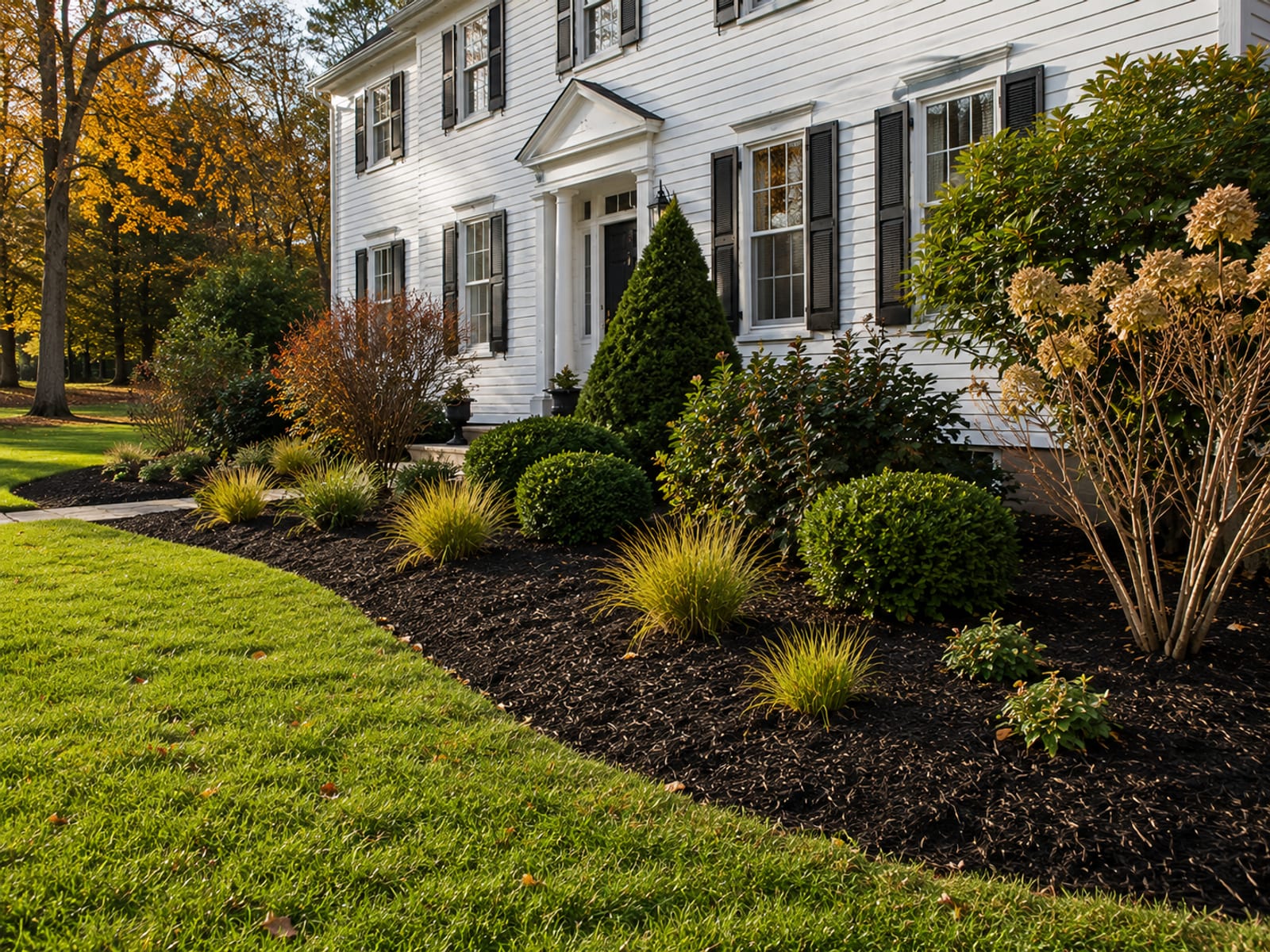
Freshly mulched garden beds along the front foundation of a New England colonial home in autumn light

What Do Mulching Services Include?

Mulching is the process of spreading a layer of organic or inorganic material over the soil around your plants, trees, and garden beds. When done correctly, at 2 to 3 inches deep for garden beds and 2 to 4 inches for trees, mulch holds moisture in the soil, keeps weeds from taking over, regulates soil temperature through harsh Northeast winters and summers, and slowly breaks down to feed the ground beneath it. DLD Home Improvements provides mulch installation for residential properties, commercial sites, and multi-property accounts across the service area, with the right material matched to your specific beds and plants.

The service covers everything from prep work and old mulch removal to fresh application and cleanup. Whether you have a few front beds or acres of commercial grounds, the process is consistent: clean prep, correct depth, and proper placement around plant stems and tree trunks. You tell us what you need, we show up with the right materials and equipment, and the job gets done.

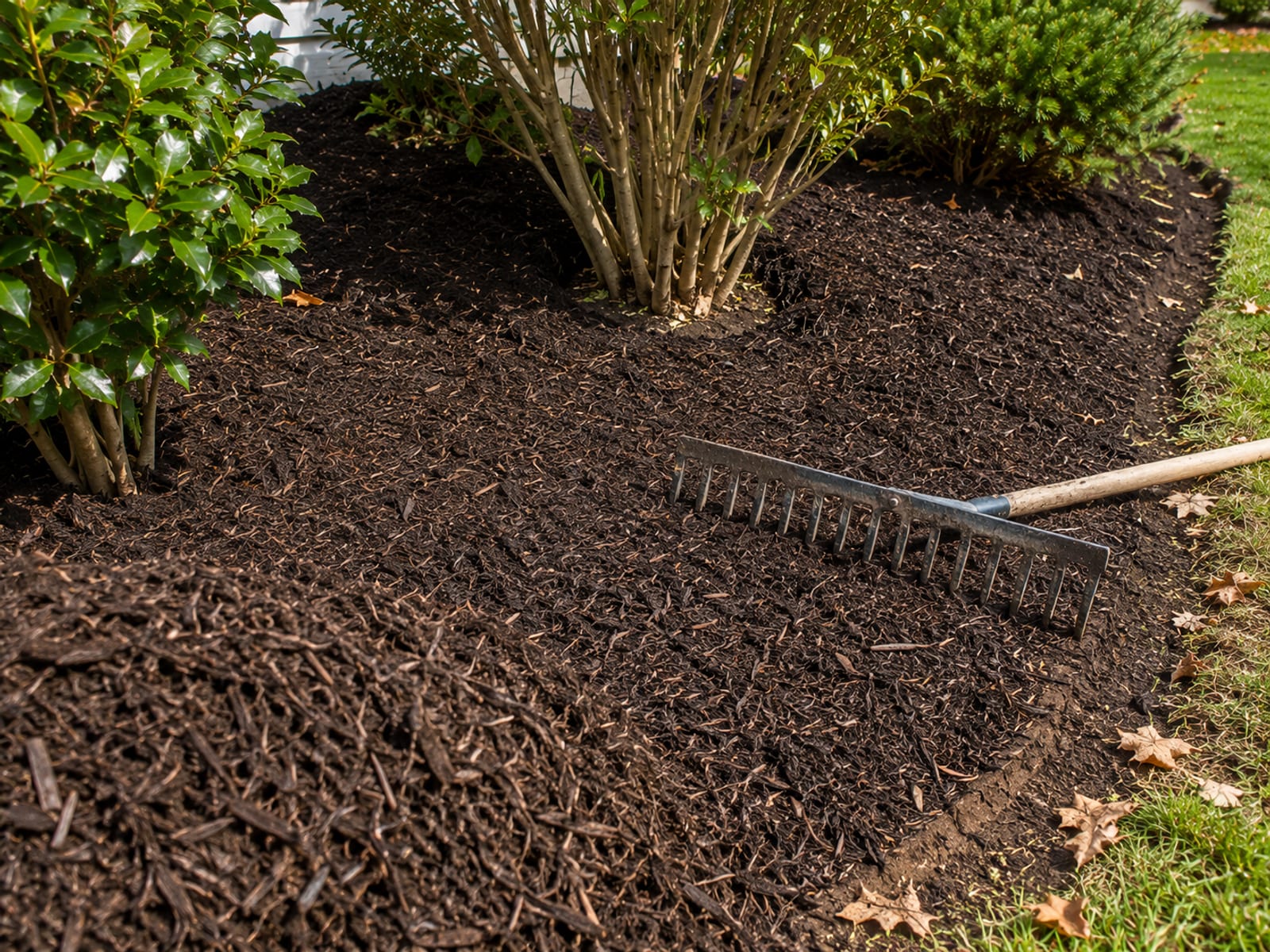
Close view of dark shredded hardwood mulch spread around shrub bases in a residential planting bed with a steel rake resting nearby

Why Does Proper Mulching Matter for Northeast Properties?

The Northeast is not a forgiving climate for plants. Connecticut, Massachusetts, and New York all throw the same combination at your landscaping every year: cold winters, wet springs, dry summers, and wind off the coast. Without mulch, exposed soil loses moisture fast in summer, freezes and thaws repeatedly in winter, and gets hammered by weeds the moment temperatures rise. That cycle exhausts plants and drives up maintenance costs year after year.

Organic mulch acts as a buffer. It insulates roots against temperature swings, slows water evaporation so you water less, and suppresses weeds by blocking the light they need to germinate. As it breaks down over the season, it adds organic matter back into the soil, which is especially useful in the heavy clay soils common across much of Connecticut and the Hudson Valley. Coastal properties in particular benefit from mulch that is laid and secured properly, since coastal winds can displace lightweight material and leave beds exposed.

For commercial properties, consistent mulch application does more than protect plants. It signals that the property is maintained, which matters for tenant retention, customer impressions, and overall curb appeal. Facilities managers handling multiple sites know how quickly unmaintained beds become an eyesore and how quickly a fresh round of mulch puts them back in order.
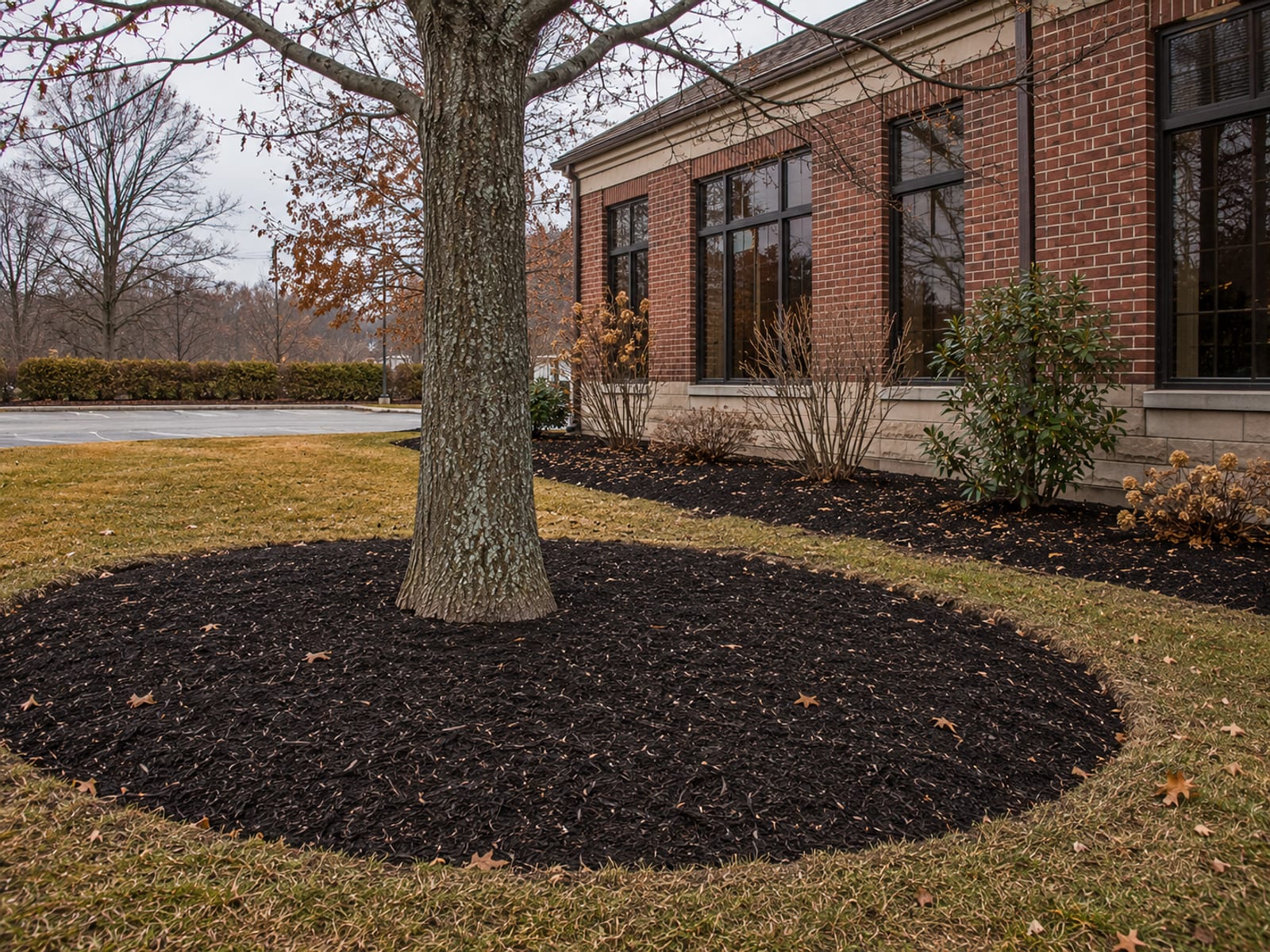
Well-mulched tree ring and surrounding planting beds beside a brick New England commercial building in late autumn with bare deciduous trees behind

What Types of Mulch Work Best in the Northeast?

Not every mulch type is right for every application. The material you choose affects how long it lasts, how it looks, and what it does for your soil. DLD Home Improvements will walk you through the options and recommend the right fit based on your beds, your plants, and your goals.

Shredded Hardwood Bark

One of the most widely used mulches in the Northeast, shredded hardwood bark breaks down slowly, so it lasts longer between applications. It locks together well, holding its position in wind and rain without washing or blowing away. It works well around trees, shrubs, and mixed perennial beds.

Dyed Bark Mulch

Available in deep red, brown, and black, dyed mulch gives beds a rich, finished look that holds its color through the season. It is a popular choice for homeowners and commercial properties where appearance matters as much as function. The dye is typically non-toxic and safe for plants and soil.

Compost-Based Mulch

Compost mulch doubles as a soil amendment. As it breaks down, it feeds the soil directly, improving structure and microbial activity. It is an excellent option for vegetable gardens and native plant beds where building long-term soil health is the priority. Connecticut and Massachusetts both have strong municipal composting programs that source quality organic material.

Wood Chips

Coarser than shredded bark, wood chips are best suited for pathways, around large trees, and in areas where you want long-lasting ground cover without the finer look of bark mulch. They break down more slowly and provide strong moisture retention. Fresh wood chips from regional tree services are a sustainable local option.

Straw Mulch

Straw works well in vegetable gardens and around newly seeded lawn areas. It is lightweight, easy to apply, and decomposes relatively quickly to add organic matter to the soil. For CT and MA vegetable gardens in particular, straw from local farms is a practical, low-cost choice.

How Does the Mulching Process Work?

DLD Home Improvements follows a consistent process for every mulching job, whether it is a single residential bed or a multi-site commercial property.

  1. 1

    Site Assessment and Material Selection

    Before any material goes down, we look at what you have: the size and shape of your beds, what is planted in them, current soil conditions, and any drainage or moisture issues that affect material choice. We match the mulch type to the application rather than defaulting to one material for every job.

  2. 2

    Bed Preparation

    Good mulch application starts with clean beds. We remove old, broken-down mulch that has become compacted or is harboring fungal issues, pull visible weeds, and define bed edges before anything new goes down. Skipping this step leads to layering problems and poor results.

  3. 3

    Application at the Right Depth

    We apply mulch at 2 to 3 inches deep in garden and flower beds, and 2 to 4 inches deep around trees. Depth matters. Too little and you lose the weed-suppression and moisture-retention benefits. Too much and you create waterlogged conditions that damage roots and invite disease. We keep mulch pulled back 2 to 3 inches from tree trunks and plant stems to prevent rot, never piling it against the base of trees in the volcano pattern that causes long-term damage.

  4. 4

    Edging and Perimeter Work

    After the mulch is laid, we clean the perimeter of each bed so the edges are sharp and defined. Clean lines make the finished product look intentional and well-maintained rather than just covered.

  5. 5

    Cleanup and Final Walk-Through

    We clear mulch off walkways, driveways, and lawn areas, bag or haul any debris from the prep work, and do a final check of the beds before we leave. The property should look better when we leave than when we arrived, with nothing left behind to deal with.

When Should You Mulch in the Northeast?

Timing your mulch application makes a real difference in how well it performs. The standard guidance for the Northeast is to wait until soil temperatures reach around 50°F and the ground has dried out from spring thaw before applying spring mulch. For coastal Connecticut and the lower Hudson Valley, that typically falls in late March to early April. Northern and inland areas of Connecticut and Massachusetts tend to take longer to warm and dry out, so mid to late April is a more realistic window.

Mulching too early, before the soil has warmed, traps cold in the ground and slows plant emergence. Organic matter that cannot breathe under a wet, cold mulch layer can also develop fungal problems. Waiting too long into spring, on the other hand, gives weeds a head start before the mulch goes down and reduces its effectiveness for the rest of the season.

A second application in fall, once plants have gone dormant, helps protect root systems through freeze-thaw cycles over winter. This is especially useful for perennials, newly planted shrubs, and trees that are still establishing their root systems. DLD Home Improvements handles both spring and fall applications, so you can set up a schedule and not have to think about it.

Why Choose DLD Home Improvements for Mulching?

DLD Home Improvements is licensed and insured, serving residential and commercial clients across the service area. What separates a professional mulching service from a quick dump-and-spread job is attention to prep work, correct application depth, the right material for your specific plants and beds, and a finished product that holds up through the season.

Residential and Commercial Experience

We work on single-family homes, multi-unit properties, commercial buildings, and large-scale grounds maintenance accounts. Whether you have two beds in front of your house or a dozen properties that all need to look consistent, we can handle the scope.

Correct Application Every Time

We follow the 2-to-4-inch depth standard, keep mulch away from trunks and stems, and never use the volcano mulching pattern that damages trees over time. The basics done right make a bigger difference than any premium product applied incorrectly.

Full-Service Property Work

Mulching does not always happen in isolation. If your property also needs lawn care, landscaping, shrub removal, tree removal, or clean-out work done in the same visit, DLD Home Improvements handles those services too. You deal with one crew and one schedule instead of coordinating multiple contractors.

Regional Knowledge

We know the differences between coastal Connecticut beds that deal with wind and salt air, heavy inland clay soils, and the colder microclimates in northern CT and Springfield MA. That regional experience shows up in the results.

Reliable Scheduling and Follow-Through

We show up when we say we will, do the work that was agreed on, and leave the property clean. For commercial clients managing multiple sites, reliable scheduling is not optional; it is the baseline expectation. We take that seriously.

Mulching FAQs

Answers to the questions property owners and facilities managers ask most often about mulch installation.

Most organic mulches break down over the course of a year, especially in the Northeast where wet springs and summer humidity accelerate decomposition. The general rule is to refresh mulch once in spring and again in fall if needed, checking the depth before reapplying rather than simply adding more on top of what is already there. Layering new mulch over old compacted material without checking depth can push you over the 4-inch maximum and create waterlogging problems.

No, and this is one of the most common mistakes homeowners make. Piling mulch against the base of a tree trunk, sometimes called volcano mulching, traps moisture against the bark, creates conditions for rot and fungal disease, and can attract insects and rodents that damage the tree over time. Mulch should stop 2 to 3 inches from the trunk and flare out from there, creating a donut shape rather than a volcano.

Dyed mulch uses colorants to create a consistent, rich appearance in red, brown, or black that holds longer than natural mulch, which fades as it weathers. The dyes used in most commercial products are considered non-toxic and safe for plants, but it is worth confirming the source if you are mulching a vegetable garden or edible landscape. Natural hardwood mulch and wood chips break down faster and feed the soil more actively as they decompose.

The amount depends on the square footage of your beds and the depth you are applying. A standard calculation is that one cubic yard of mulch covers approximately 100 square feet at a 3-inch depth. Before any job, DLD Home Improvements assesses your beds to estimate the right quantity so you are not paying for material you do not need or running short mid-job.

Yes, but with care. New plantings benefit from mulch that holds soil moisture and moderates temperature while roots are establishing, which makes the establishment period faster and less stressful for the plant. The key is keeping the mulch from direct contact with stems and trunks, staying at the correct depth, and using an organic material that will feed the soil as it breaks down rather than a heavy bark product that can compact.

A properly applied 2-to-3-inch layer of mulch suppresses a significant portion of weed germination by blocking the light that weed seeds need to sprout. It will not eliminate every weed, especially persistent perennial weeds with deep root systems, but it substantially reduces the ongoing workload. For beds with heavy existing weed pressure, addressing the weed problem during the prep phase before mulch goes down gives the best results for the season.

Yes. DLD Home Improvements works with commercial property managers and building owners across CT, Springfield MA, and Albany NY who need consistent mulching across multiple locations. We can set up a scheduled maintenance arrangement so all your properties are handled on the same timeline without you having to track each one separately. Contact us at 959-759-0391 or info@dldhomeimprovements.com to discuss your portfolio.

Ready to Schedule Your Mulching Service?

Call 959-759-0391 or email info@dldhomeimprovements.com to get started. We serve properties throughout the region and surrounding areas.

Get Started

Ready to talk about your project?

Call or email DLD Home Improvements, or request an estimate. Available Monday through Friday and weekends, 8 AM to 8 PM, with emergency service when you need it.