Skip to content
DLD Home Improvements

Services

Guardrail Installation for Commercial & Residential Properties in CT, MA, and NY

DLD Home Improvements installs code-compliant guardrails for commercial sites, parking facilities, rooftops, elevated decks, and roadside applications across Connecticut, Springfield MA, and Albany NY. Whether you need a new installation or a replacement after impact damage, we handle the full scope from material selection to final inspection.

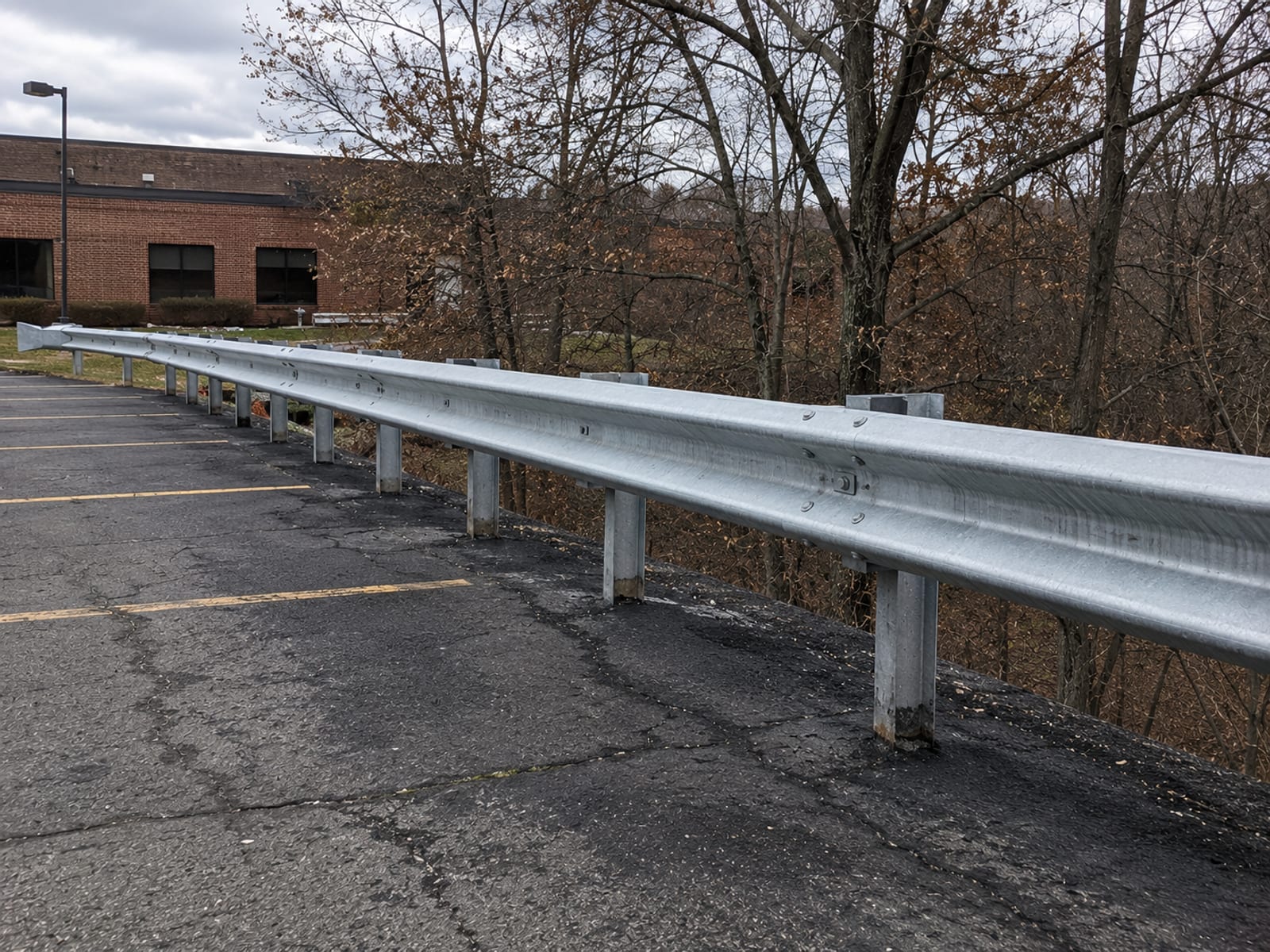
Finished W-beam steel guardrail along a commercial parking lot perimeter in Connecticut

What Does Guardrail Installation Include?

Guardrail installation covers the planning, supply, and securing of barrier systems that protect people, vehicles, and property from falls, impacts, and roadside hazards. When you work with DLD Home Improvements, you get a full-service installation: site assessment, material selection, concrete anchoring or post driving, rail attachment, and a final walk-through confirming everything meets the applicable code for your property type. For commercial properties in the region, that typically means 42-inch guard height per IBC standards. For residential decks, the IRC minimum of 36 inches applies. We confirm which code governs your site before a single post goes in the ground.

This matters because the wrong height or the wrong spacing between rail infills can result in a failed inspection, a liability exposure, or both. The IBC enforces a 4-inch sphere rule on elevated platforms to protect young children, and building inspectors across the region are increasingly strict about it. DLD Home Improvements installs to those requirements from the start so you are not paying for rework later.

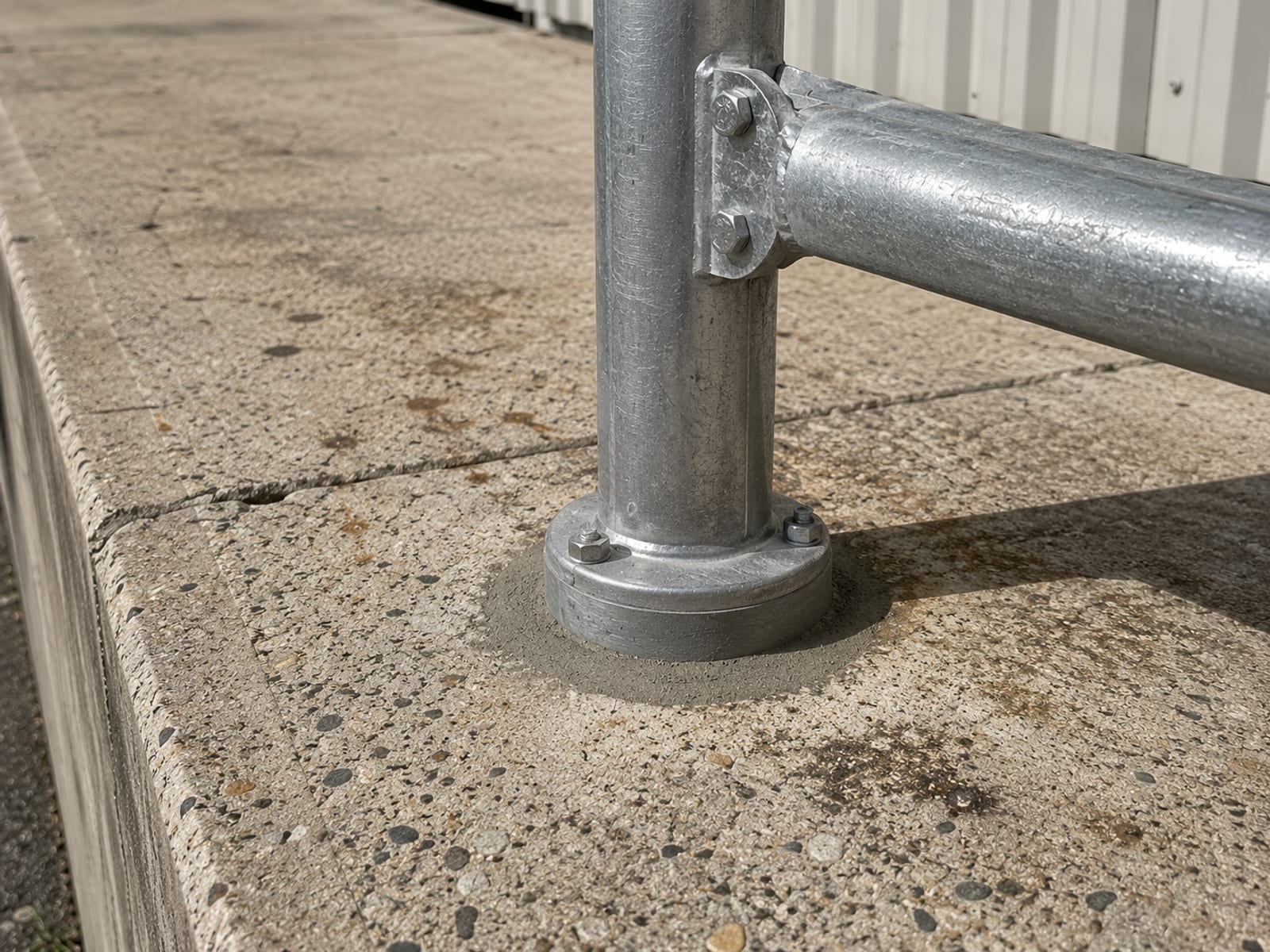
Close-up of a steel pipe guardrail post core-drilled and grouted into a concrete loading dock apron

What Types of Guardrail Does DLD Home Improvements Install?

Different sites call for different systems. DLD Home Improvements installs the configurations most commonly required by property owners and facilities managers across our service area. Each type below is matched to the application where it performs best.

W-Beam Steel Guardrail

The most common roadside and perimeter barrier in the region. W-beam rail is a galvanized corrugated steel system mounted on driven posts. It meets MASH compliance standards when installed at the correct 31-inch height above the riding surface, making it the standard choice for roadway edges, parking lot perimeters, and access road barriers on commercial properties.

Cable Guardrail

A tensioned cable system growing in use on limited-access driveways and commercial properties where deflection room exists. Cable guardrail is engineered to absorb and redirect high-impact energy without the rigid rebound of steel beam systems, and it presents a lower visual profile that works well on properties where sight lines matter.

Pipe Railing and Structural Guardrail

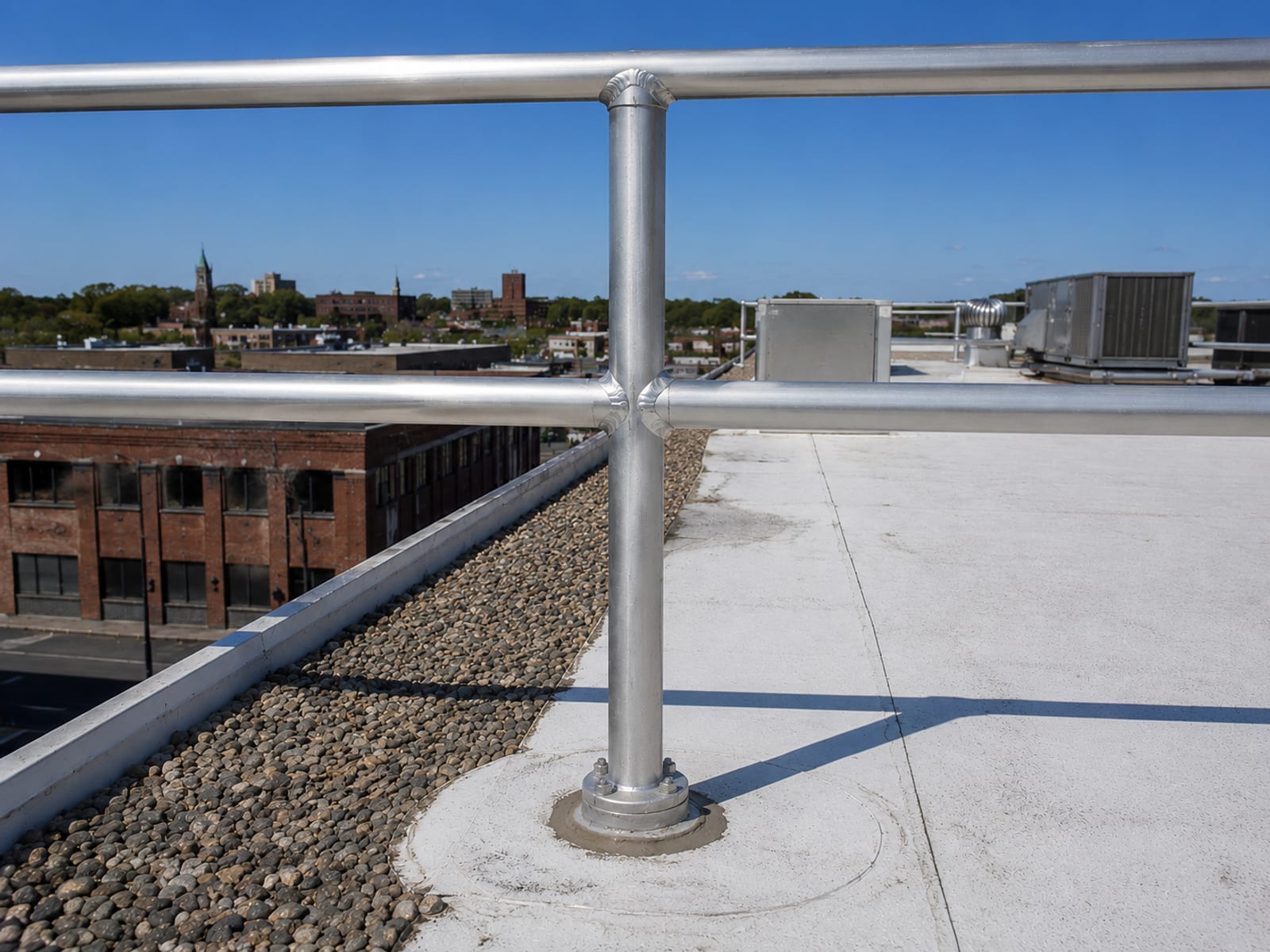
Steel or aluminum pipe railing is the standard solution for elevated commercial walkways, loading docks, rooftop access areas, and mezzanines. DLD Home Improvements anchors pipe rail systems directly into concrete or structural decking with core-drilled post bases, meeting IBC requirements for commercial environments.

Parking Lot and Drive-Through Barriers

Concrete-filled steel pipe bollards, low-profile concrete barriers, and modular wheel stops protect storefronts, drive aisles, and building corners from vehicle impacts. These are especially common for commercial build-outs and multi-tenant facilities where liability and property damage are ongoing concerns.

Steel-Backed Timber and Aesthetic Systems

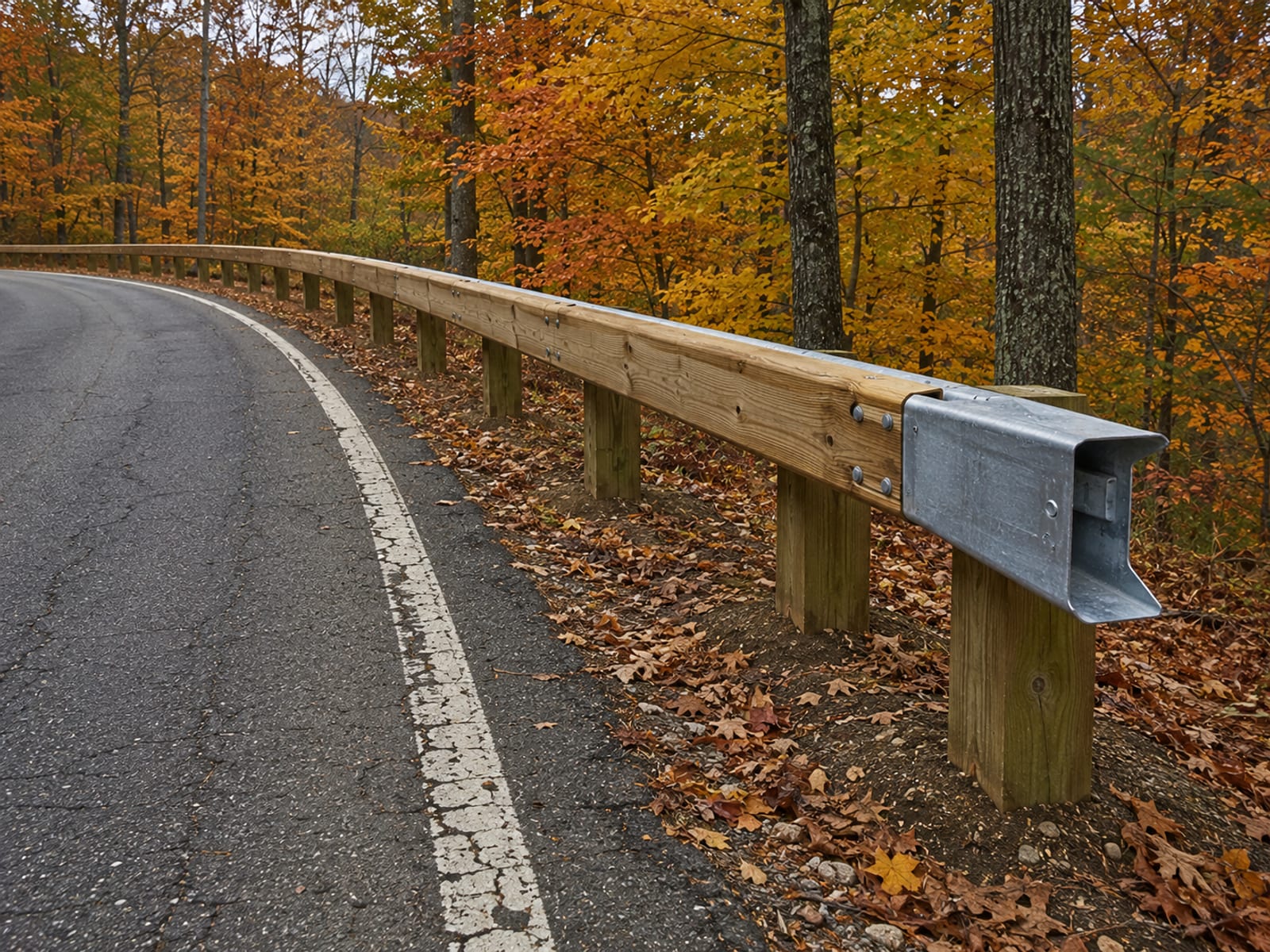
Properties near scenic areas or historic districts sometimes require guardrail that blends with the surroundings. Connecticut's Merritt Parkway corridor popularized steel-backed timber guardrail as a hybrid that keeps the look of wood with the structural backing of steel. DLD Home Improvements can install similar systems for properties where appearance is part of the spec.

How Does the Installation Process Work?

Every guardrail project runs through the same sequence of steps regardless of property type or system, from first contact to completed installation.

  1. 1

    Site Assessment and Code Review

    We visit the property, measure elevation changes and exposed edges, and confirm which code applies: IBC for commercial, IRC for residential, or state DOT specifications for roadside installations. This is where we identify soil conditions, underground utilities, and any drainage factors that affect post placement or anchoring method.

  2. 2

    Material Selection and Spec Confirmation

    We recommend the guardrail system that fits your site conditions, your budget, and the applicable code requirements. You get a clear proposal listing material type, post spacing, height, and end treatment options before any work begins. For commercial property managers overseeing multiple sites, we can standardize specs across locations if that is part of your plan.

  3. 3

    Ground Prep and Post Installation

    Posts are either driven into compacted soil or set in concrete footings, depending on ground conditions and the load requirements of the system. For concrete surfaces like parking decks or loading dock aprons, we core-drill post sleeves and set them in non-shrink grout. Post depth and spacing follow engineering standards for the system being installed.

  4. 4

    Rail Attachment and Hardware Torque

    Once posts are set and cured or driven to proper depth, rail panels are attached with the correct offset blocks and hardware specified for the system. Torque specs on all fasteners matter because under-torqued connections can allow rail walk during an impact, reducing the system's effectiveness. DLD Home Improvements follows manufacturer torque requirements on every installation.

  5. 5

    End Treatments and Transitions

    A guardrail run is only as safe as its endpoints. Open ends of W-beam and similar systems can spear a vehicle during an impact if not properly treated. We install appropriate end terminals and flare or tuck the rail end according to site conditions. For interior commercial applications, exposed rail ends are capped or returned to a wall or post to eliminate snag and puncture risk.

  6. 6

    Final Walk-Through and Inspection Support

    We walk the completed installation with you before we leave, confirm all heights and spacings, and document the work. For commercial projects requiring a building department inspection, we can be on-site during the inspection and address any punch-list items on the spot.

Why Does Code Compliance Matter So Much on This Type of Work?

Guardrail is one of those building elements where a small error creates a large liability. If the rail height is off by a few inches, or if post spacing exceeds what the system is rated for, the installation may look fine but fail to perform when it actually matters. State DOT offices in Connecticut, Massachusetts, and New York have moved aggressively toward MASH-compliant systems, meaning any W-beam guardrail that does not meet the 31-inch minimum height after a road overlay gets flagged for replacement. Commercial building inspectors are equally specific about IBC requirements for elevated platforms, including the 4-inch sphere infill rule that governs picket and rail spacing.

Getting this wrong on a commercial property creates real risk. A failed inspection delays your project. A guardrail that does not meet code on an elevated walkway or loading dock is an OSHA concern as well as a liability one. Property managers who oversee multiple facilities in the region have enough to manage without scheduling a second contractor to fix a non-compliant installation. DLD Home Improvements works from the applicable code standard on every project so that the inspection is a confirmation, not a surprise.

Completed pipe guardrail system on a flat commercial rooftop with a height measurement marker visible at post level

Which Properties Need Guardrail and When?

Any property with an elevated surface, a vehicle traffic area near a drop-off, or a roadside edge that creates a risk of falls or runoff needs guardrail. In practice, commercial property managers most often contact DLD Home Improvements for guardrail after one of four situations: a building permit or change of occupancy triggers a code review and the existing guardrail does not meet current standards; a vehicle impact damages an existing rail section that needs repair or full replacement; a new construction or build-out adds an elevated area requiring fall protection before a certificate of occupancy can be issued; or a property liability audit flags a guardrail height or infill spacing issue that needs correction.

Residential customers typically come to us when a deck rebuild or addition reaches a height that triggers the 36-inch guard requirement under the IRC, or when an existing deck railing has rotted or pulled away from the framing. We handle both the guardrail portion and any associated carpentry work to address the underlying structural issue at the same time, keeping the project from becoming two separate scheduling headaches.

What Makes DLD Home Improvements the Right Contractor for This Work?

Facilities directors and commercial property managers working across the service area need a contractor who can handle multiple site types without needing to be managed at every step. DLD Home Improvements is licensed and insured, and our crew works across the full range of property types our clients manage.

Cross-Scope Capability

Guardrail is one part of what DLD Home Improvements does. When your site needs paving, fencing, carpentry, concrete work, or painting alongside the guardrail installation, you can put it all under one contract. That matters for commercial clients who want fewer vendors and a single point of contact.

Commercial and Residential Experience

We install guardrail on loading docks, parking structures, elevated walkways, rooftop access areas, residential decks, and roadside perimeters. Different applications follow different codes, and our crew knows the difference. You are not getting a team that handles only one type of installation and learns the rest on your job.

Regional Code Familiarity

CT, MA, and NY each have their own state DOT specifications layered on top of national standards. ConnDOT's approved systems list, MassDOT's 2026 Standard Specifications, and NYSDOT's Highway Design Manual Chapter 10 are not the same document and are not interchangeable. We work in all three states regularly and stay current on what each jurisdiction requires.

Straightforward Proposals

You get a written scope before work starts. Material type, post spacing, rail height, end treatment, and anchoring method are all spelled out so there is no ambiguity about what you are paying for. Change orders happen when the scope changes, not because something was vague in the original proposal.

Guardrail Installation FAQs

These are the questions property owners and facilities managers ask most often when they contact DLD Home Improvements about guardrail work.

Most standard commercial guardrail runs of 100 to 300 linear feet can be completed in one to two days once materials are on-site. Larger perimeter installations or projects that require concrete footing curing time will run longer, typically three to five days across the full scope. We give you a realistic timeline in the proposal so your facility operations team can plan around it.

MASH stands for Manual for Assessing Safety Hardware. It is the current federal standard for roadside safety hardware and sets a 31-inch minimum height for W-beam guardrail measured from the road surface. It primarily affects roadway-adjacent and parking lot perimeter installations. If your property fronts a public road or your access drives are subject to state DOT oversight, your guardrail may need to meet MASH standards. We confirm whether MASH or IBC requirements govern your specific installation before we write the proposal.

Yes, in most cases. If the existing system is still structurally sound and meets current height requirements, we can replace the damaged panels, posts, and hardware in the affected section and blend the repair into the existing run. Where a road overlay has dropped the existing rail below the minimum height, the low section will need full replacement to stay compliant. We assess the full run during the site visit and tell you honestly which sections can be repaired and which need replacement.

A guardrail is a barrier system designed to prevent falls from an elevated surface or to redirect vehicles away from a hazard. It does not need to be graspable. A handrail is specifically designed to be gripped and is required along stairways and ramps for support while moving. Many elevated platforms require both: a guardrail at the edge and a handrail along any stair or ramp access point. DLD Home Improvements installs both systems and can incorporate them into a single project.

For most commercial guardrail installations, yes. Structural barrier work that ties into a building, a deck, or a loading dock is typically subject to a building permit across the region. Roadside guardrail on private drives may or may not require a permit depending on local ordinance. DLD Home Improvements confirms permitting requirements for your municipality as part of the planning process and can pull the permit on your behalf where that is part of the project scope.

A failed inspection means the non-compliant section needs to be corrected before the certificate of occupancy or operational approval is issued. If DLD Home Improvements did the installation and there is a code compliance issue attributable to our work, we come back and make it right at no additional charge. If you bring us in to correct a failed inspection from another contractor, we assess what needs to change and provide a clear scope to get the installation through.

Yes. On concrete surfaces where driven posts are not feasible, we use core-drilled post sleeves set in non-shrink grout, surface-mounted base plates anchored with structural concrete anchors, or pre-sleeved embed plates depending on the deck design and load requirements. We review the structural drawings for the deck when available to confirm the anchoring method is compatible with the deck's load capacity. This step protects both the guardrail performance and the integrity of the deck structure.

Serving CT, Springfield MA, and Albany NY

DLD Home Improvements works with commercial property managers, building owners, and facilities directors across Connecticut, Springfield Massachusetts, and Albany New York. If you manage multiple properties across more than one of those markets, you can work with a single contractor for guardrail, fencing, paving, concrete, and a full range of building services without sourcing separate vendors in each state.

Our crew is familiar with the local building departments, DOT requirements, and inspection processes in each part of our service area. That familiarity shortens the time between proposal and completed work because we are not starting from scratch on permitting or code research for every project.

If you have a site that needs guardrail installed or replaced, we are ready to visit the property, assess the scope, and give you a written proposal. No vague estimates, no placeholder numbers. You get the full picture before you commit to anything.
Get a Quote for Guardrail Installation

Ready to move forward? DLD Home Improvements makes it easy to get a clear, written proposal for your guardrail installation project. No pressure, no vague estimates. A straight answer about what your site needs and what it will cost.

Completed steel-backed timber guardrail along a wooded Connecticut roadside with autumn foliage in the background

Get Started

Ready to talk about your project?

Call or email DLD Home Improvements, or request an estimate. Available Monday through Friday and weekends, 8 AM to 8 PM, with emergency service when you need it.