Skip to content
DLD Home Improvements

Services

Shelving Installation in CT, MA & NY

DLD Home Improvements installs custom and standard shelving for homes and commercial spaces across Connecticut, Springfield MA, and Albany NY. Floating shelves in a living room, built-in storage in a garage, or industrial racking in a warehouse, we handle the full job from wall prep to final mount.

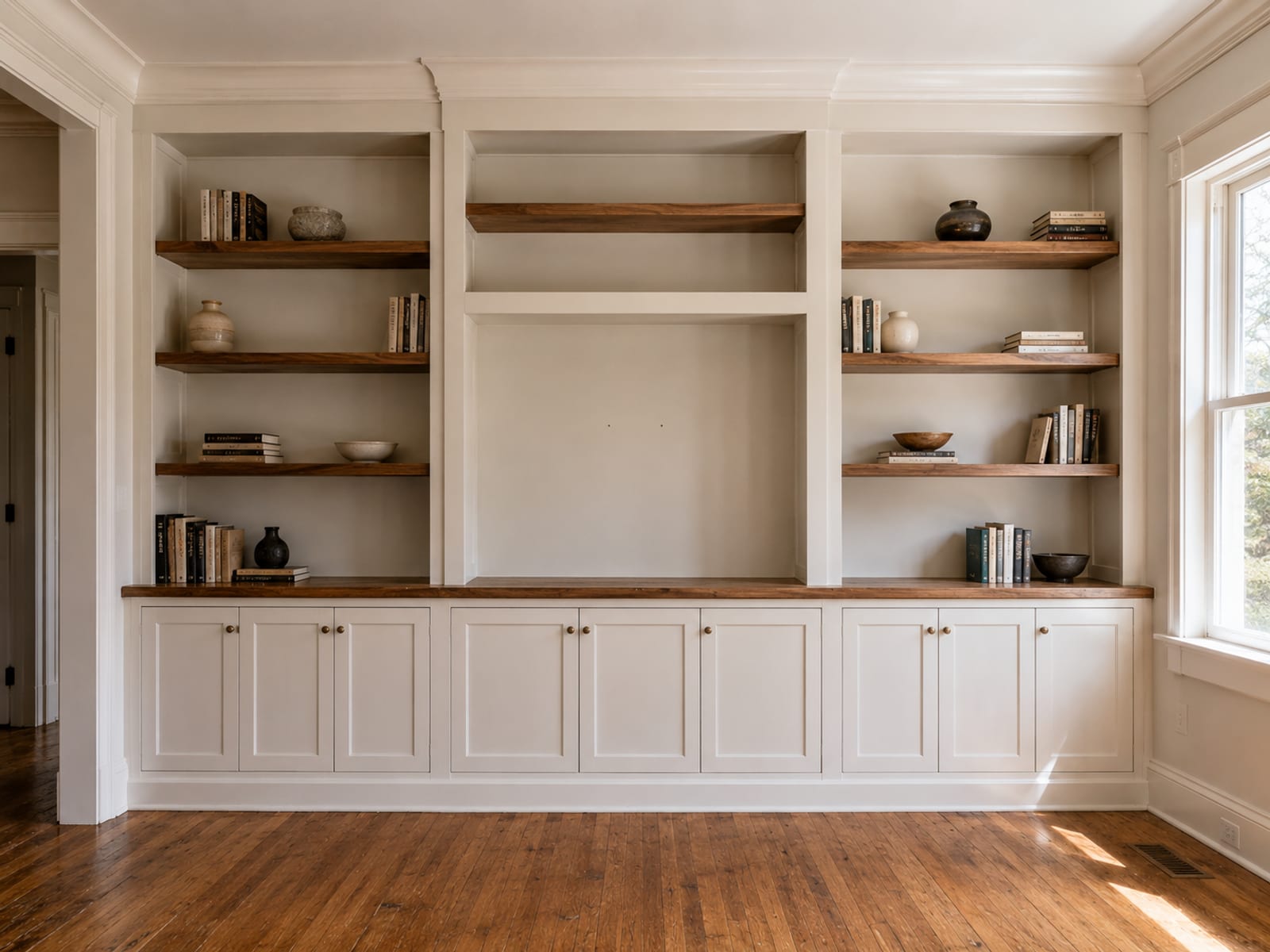
Finished built-in wall unit with open shelving, closed lower cabinets, and a central TV recess in a Connecticut living room

What Do You Actually Get With Professional Shelving Installation?

Shelving installation is the process of securely mounting shelves, racking systems, or built-in storage units to walls, ceilings, or floor structures in a way that holds weight safely and looks intentional. When you hire DLD Home Improvements for shelving work, you get a crew that assesses your walls, locates studs or selects the right anchors for the surface type, and installs everything level, plumb, and anchored to handle real daily use. The result is shelving that stays put, whether that means a floating walnut shelf in your living room or heavy-duty warehouse racking in a commercial facility.

What separates a professional install from a weekend DIY job is mostly what you don't see: proper wall anchoring, the right fastener for the substrate (drywall, concrete, masonry, or metal stud), and load capacity that matches how you actually plan to use the space. Getting those details wrong means shelves that pull out of walls, sag under weight, or fail clearance requirements from your local building department.

DLD Home Improvements installs shelving for both residential and commercial clients. The scope can be as simple as a single floating shelf in a bathroom or as involved as a full built-in wall unit that incorporates storage, display, and a media center in one continuous structure.

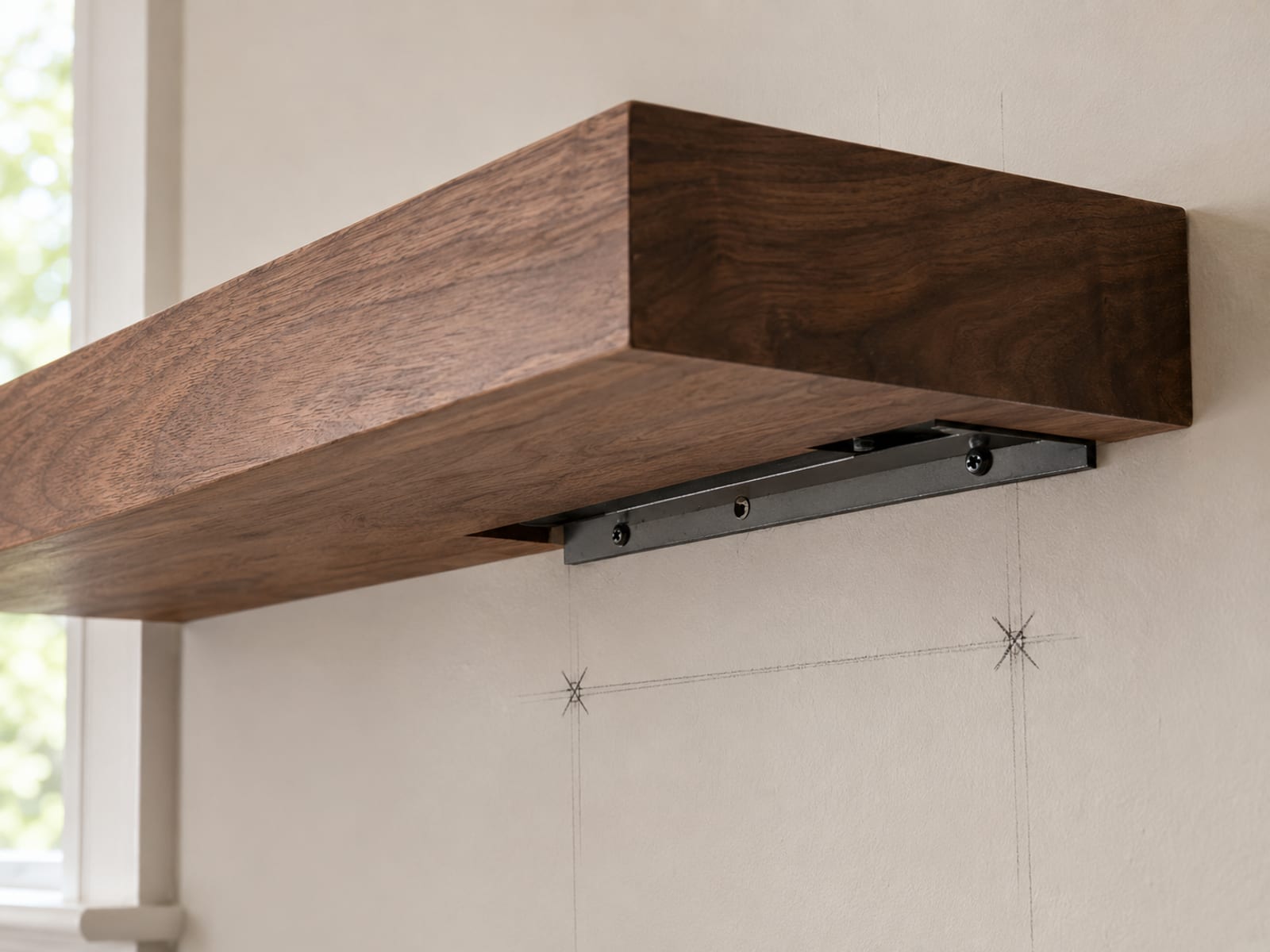
Close-up of a thick floating wood shelf being set onto concealed wall-mounted hardware anchored into wall studs

Why Does Proper Shelving Installation Actually Matter?

Most people think about shelving in terms of looks, but the safety and structural side of the job matters just as much. Shelving that isn't braced and anchored correctly can pull free from walls, tip forward, or fail under load. In commercial settings, regulations require that shelving be anchored according to seismic design standards, that shelves holding individual containers include a lip or guard, and that clearance from fire sprinklers (typically 18 inches minimum) is maintained. Skipping any of those requirements creates liability exposure for a property owner or building manager.

On the residential side, the stakes are different but still real. A floating shelf loaded with books or ceramics that isn't anchored into studs or set with the right wall anchors can strip out of drywall without much warning. Thicker, architectural floating shelf profiles that are popular right now are heavier than older thin-profile shelves, which means the anchoring job needs to be done right the first time.

In Connecticut, Massachusetts, and New York, most built-in shelving that's part of a renovation or a commercial build-out requires a building permit. Each state follows the International Building Code as its baseline, though local municipalities in New York are allowed to adopt more stringent standards. Working with a licensed and insured contractor means those requirements get handled correctly and you're not left trying to sort out local code on your own.

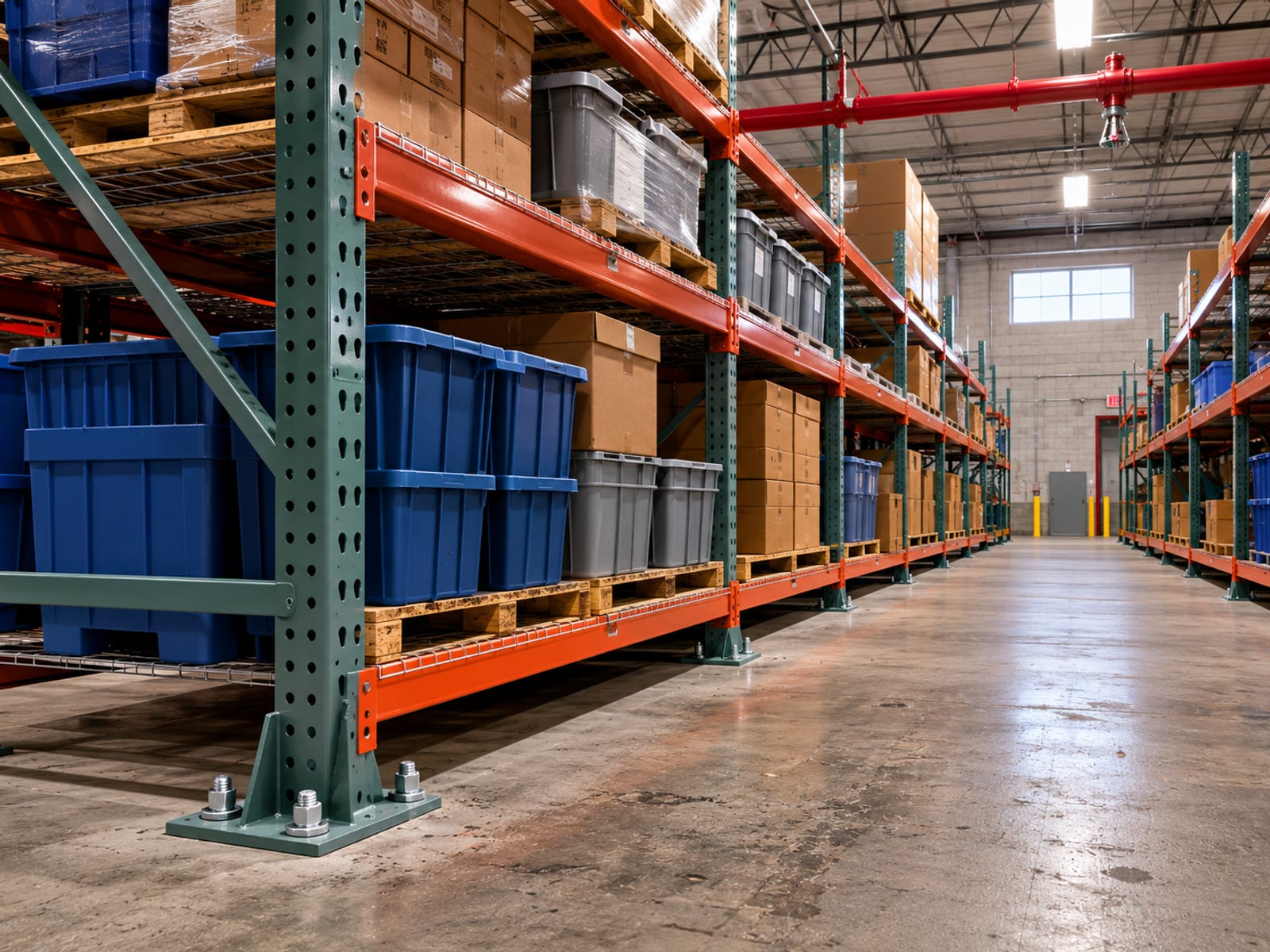
Floor-anchored industrial metal racking in a warehouse interior with visible base plate bolts and fire sprinkler clearance above the top shelf

What Types of Shelving Does DLD Home Improvements Install?

DLD Home Improvements works across residential and commercial shelving categories. The types below cover the main shelving we install.

Floating Shelves

Wall-mounted shelves with no visible brackets, installed using concealed hardware anchored into studs or masonry. Popular in living rooms, kitchens, bathrooms, and home offices. Current design trends favor thicker profiles with deeper, warmer wood tones over the thin white shelves that were common a few years ago.

Built-In Wall Units

Custom shelving systems built directly into a wall cavity or framed out as a wall-to-wall structure. Often incorporates a mix of open shelving, closed cabinets, and space for a TV or fireplace. These require carpentry work, which is part of DLD Home Improvements' service scope.

Garage & Utility Shelving

Heavy-duty freestanding or wall-mounted shelving designed for tools, bins, seasonal storage, and equipment. Installed with proper floor anchoring and wall bracing where required. Built for real weight, not just light household items.

Closet Shelving Systems

Modular or custom closet shelving that replaces a single rod and shelf with a full storage layout: double hanging, shelves, drawers, and accessories. Modern systems use fully adjustable components that can be reconfigured as your needs change over time.

Commercial & Warehouse Shelving

Industrial racking and shelving for commercial spaces, retail stock rooms, warehouses, and storage facilities. Installation accounts for fire sprinkler clearance, seismic anchoring requirements, and load capacity. Permitting and code compliance is handled as part of the job.

Retail & Display Shelving

Shelving for storefronts, showrooms, and commercial interiors where both function and appearance matter. Installed level and aligned so product display looks clean and professional. Can be combined with commercial door and interior build-out work on larger projects.

How Does the Shelving Installation Process Work?

Every shelving project at DLD Home Improvements follows the same basic process, from the first call to the finished install. The steps below apply whether you're doing a single room or a full commercial facility.

  1. 1

    Site Assessment and Planning

    We look at the space, the wall construction (drywall over wood stud, masonry, concrete block, metal stud framing), and what you're planning to store or display. That information determines the right shelving type, the correct anchoring method, and whether a building permit is needed for your municipality.

  2. 2

    Permit Coordination (When Required)

    Built-in shelving that's part of a renovation, commercial build-out, or significant structural installation usually requires a permit in CT, MA, and NY. DLD Home Improvements coordinates with the local building department so the paperwork doesn't become your problem to sort out.

  3. 3

    Wall Prep and Layout

    We locate studs or mark anchor points, check for level and plumb across the full installation area, and mark out the layout before anything goes into the wall. This is where errors get caught before they cost time and patching work.

  4. 4

    Anchoring and Mounting

    Brackets, cleats, or concealed hardware go in first, anchored to the correct structural element for the wall type. For masonry or concrete, we use the appropriate fasteners rather than standard drywall anchors. Commercial shelving gets braced and anchored to meet local seismic design requirements.

  5. 5

    Shelf Installation and Leveling

    Shelves are mounted, checked for level, and adjusted before being fully secured. On floating shelf installations, we verify the hidden hardware is seated fully before setting the shelf in place. On modular or racking systems, we work from the bottom up and check each level before moving to the next.

  6. 6

    Final Inspection and Cleanup

    We do a final walkthrough with you, check that everything is level, tight, and holding correctly, and clean up the work area. If a permit was pulled, we coordinate the required inspection so the project closes out properly.

What Should You Know Before Getting Shelving Installed?

A few things affect how a shelving project goes and knowing them upfront saves time. The first is wall construction. Drywall over wood studs is the easiest case. Concrete, brick, masonry block, and metal stud framing each require different anchors and sometimes different tools. If you're not sure what your walls are made of, we figure that out during the site assessment.

Weight capacity is the second thing to think through before the job starts. A shelf that looks fine holding light items will fail under books, equipment, or dense storage bins if the anchoring isn't matched to the actual load. For floating shelves in particular, the concealed bracket or cleat system has to be anchored into structural members, not just drywall, to handle real weight. For commercial racking, load ratings per linear foot are part of the spec conversation from the beginning.

High-density shelving systems and commercial installations also have specific clearance requirements built into local fire codes. Most jurisdictions require at least 18 inches of clearance between the top of a shelving unit and fire sprinkler heads. If you're outfitting a storage room, stock room, or warehouse space, that clearance requirement shapes how tall your shelving can go. DLD Home Improvements factors those requirements into commercial shelving layouts before installation begins.

If you're doing a built-in shelving wall, a large garage system, or any shelving that's part of a permitted renovation, a building permit may be required. The permitting process varies by municipality across CT, MA, and NY. In Connecticut, the state building code is uniform and not locally amended. In New York, local jurisdictions can adopt more stringent standards than the state baseline. Getting the permit handled correctly at the start means you don't deal with stop-work orders or problems at closing if you sell the property later.
What Makes DLD Home Improvements the Right Call for This Job?

There are plenty of handymen and general contractors who will hang a shelf. What you're actually looking for is someone who treats the structural side of the job as seriously as the finish work, knows the code requirements for your area, and shows up to complete the project without you having to follow up repeatedly. DLD Home Improvements is licensed and insured and serves clients throughout the region.

Licensed & Insured

DLD Home Improvements is licensed and insured, which matters when work involves wall penetrations, structural anchoring, and permitted build-outs. You're covered if something goes wrong, and the work meets the documentation requirements of your local building department.

Residential and Commercial Experience

The same crew that installs floating shelves in a kitchen renovation also handles industrial racking in commercial facilities. That cross-sector experience means we understand both the design expectations of residential clients and the load, code, and compliance requirements of commercial property managers.

Code-Aware Installation

CT, MA, and NY each have their own building code adoption and local amendment process. DLD Home Improvements stays current on permit requirements, clearance standards, and seismic anchoring rules so your installation doesn't create problems during a future sale, inspection, or insurance claim.

Full-Scope General Contracting

Shelving projects often connect to other work: carpentry, painting, flooring, or a broader renovation. Because DLD Home Improvements offers general contracting across all of those trades, you can get the shelving installation and the surrounding scope handled by one contractor with one point of contact.

Straightforward Communication

You get a clear scope, a realistic timeline, and honest answers if a structural condition changes the approach. No surprises added to the invoice and no calls that go unreturned when you have a question before or during the job.

Shelving Installation FAQs

Questions that come up often about shelving installation in the area.

For freestanding shelf units or simple floating shelves, a permit is usually not required. For built-in shelving that's part of a renovation, a commercial build-out, or any installation that modifies a wall structurally, a permit is typically required. Connecticut follows a uniform state building code with no local amendments. New York allows local jurisdictions to adopt stricter standards than the state baseline. When in doubt, DLD Home Improvements can check with your local building department before the job starts.

That depends entirely on how they're anchored, not just the shelf material. A floating shelf anchored into wood studs with a properly rated cleat or concealed bracket can typically support significantly more weight than one set with standard drywall anchors into the field of the wall. Heavy-duty wire shelving systems rated for commercial use can support up to 75 pounds per linear foot when properly installed. Tell us what you plan to put on the shelves and we'll make sure the anchoring matches the actual load.

Most jurisdictions require a minimum of 18 inches of clearance between the top of a shelving unit and fire sprinkler heads. This applies primarily to commercial, warehouse, and high-density storage installations. The specific requirement can vary by municipality within CT, MA, and NY, so local fire and building codes should always be confirmed before finalizing shelving heights in a commercial space.

Modular shelving uses manufactured components with adjustable shelves and cabinets that can be repositioned or reconfigured over time as your storage needs change. Custom built-ins are constructed on-site, framed and finished to match the exact dimensions of a room, and typically feel more architectural and permanent. Modular systems are generally faster to install and easier to reconfigure; built-ins offer a cleaner look and can incorporate features like integrated seating, TV mounting, or fireplace surrounds.

Yes, but it requires different anchoring hardware than a wood stud installation. Concrete and masonry anchors or sleeve anchors are used in place of standard wood screws and toggle bolts. The process takes a bit longer because it involves drilling into the surface with a hammer drill, but the result is an extremely secure mount. Garage walls, basement walls, and exterior-facing walls in older homes are often concrete or block, and all of them can support shelving when the right fasteners are used.

New York requires that shelving used in commercial or storage applications be braced and anchored in accordance with seismic design requirements for the applicable seismic zone. For shelves holding individual containers, a lip or guard is required to prevent items from sliding off. Shelving materials must also be compatible with whatever is being stored, particularly in spaces where hazardous materials are present. These requirements are part of the NYC Administrative Code and the state Uniform Code.

Open shelving works well for items you want to display or access frequently, but it requires more ongoing organization to look intentional. Current design trends in 2026 have shifted toward more restrained use of open shelving, combined with glass-front cabinets and built-in storage that keeps most items behind a door or panel. If you're doing a kitchen or living room renovation, a mix of open display shelving and closed storage tends to give you the best of both without the upkeep demand of a fully open wall.

Serving CT, Springfield MA, and Albany NY

DLD Home Improvements installs shelving for homeowners, property managers, and commercial clients throughout Connecticut, Springfield MA, and Albany NY. Whether the job is a single floating shelf in a renovated bathroom or a full warehouse racking system that has to meet fire code clearance requirements, the approach is the same: assess the space, anchor it right, and leave it looking like it was always supposed to be there.

If you're planning a renovation that includes shelving or storage work, getting the shelving scope figured out early makes everything else go smoother. Built-in walls need to be framed before painting or flooring gets done. Commercial racking needs to be positioned and permitted before merchandise or equipment moves in. DLD Home Improvements handles all of that sequencing as part of the job.

The services most often paired with shelving installation include carpentry, painting, flooring installation, residential remodeling, and commercial build-outs. If your project touches more than one trade, you can get all of it done through one contractor.

Get a Quote on Shelving Installation

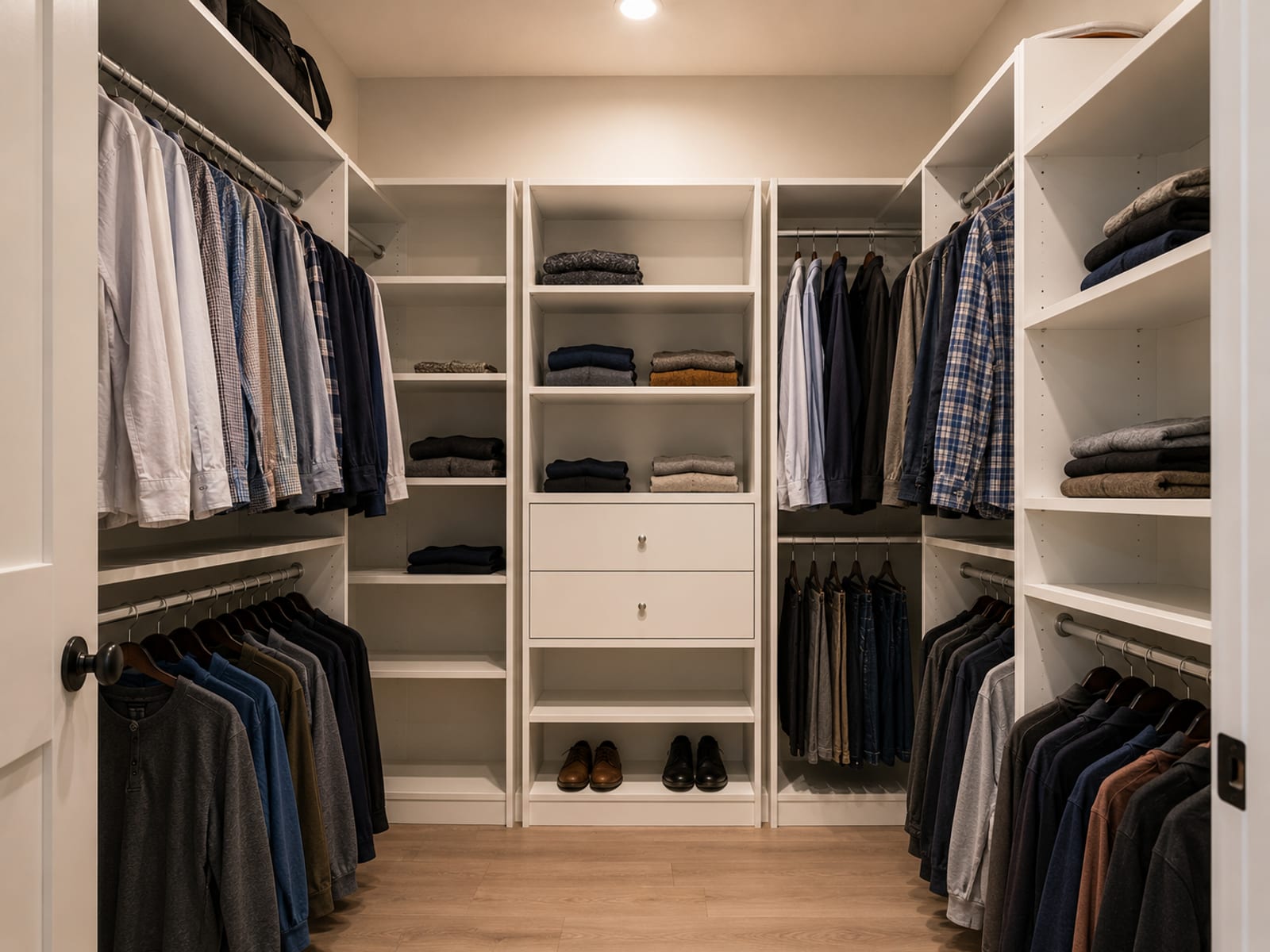
Completed custom closet shelving system with double hanging rods, open shelves, and a tower of cubby drawers in a residential bedroom closet

Get Started

Ready to talk about your project?

Call or email DLD Home Improvements, or request an estimate. Available Monday through Friday and weekends, 8 AM to 8 PM, with emergency service when you need it.