Skip to content
DLD Home Improvements

Services

Concrete & Masonry Services That Hold Up

DLD Home Improvements installs, repairs, and rebuilds concrete and masonry structures for commercial and residential properties across CT, Springfield MA, and Albany NY. From foundations and flatwork to retaining walls and decorative stone, the work is done right the first time.

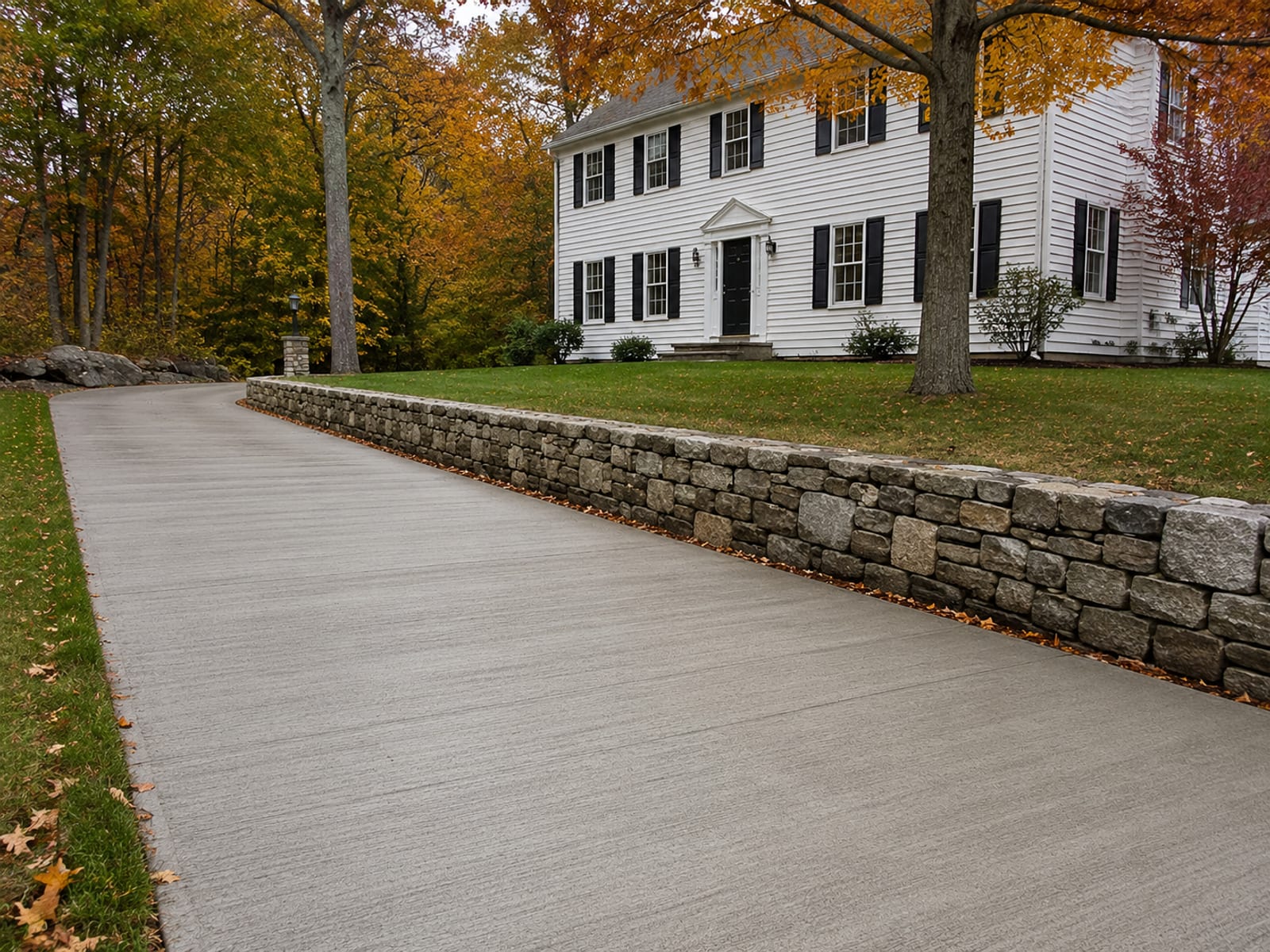
Freshly poured concrete driveway with a dry-stacked natural stone retaining wall beside a New England colonial home in autumn

What Do Concrete and Masonry Services Actually Cover?

Concrete and masonry work covers structural and decorative projects ranging from new concrete slabs and foundation repairs to block walls, stone walkways, and brick facades. When you hire DLD Home Improvements for this type of work, you get a crew that handles the full scope: site preparation, forming, pouring, finishing, and cleanup. Most residential flatwork projects, like a new driveway or patio slab, are completed within one to three days depending on size. Larger commercial jobs with footings, walls, or extensive flatwork are scoped and scheduled based on your site conditions.

The category gets used loosely, so it helps to know what falls under it. Concrete work includes poured slabs, footings, driveways, sidewalks, curbing, and structural flatwork. Masonry covers work done with block, brick, natural stone, or precast units, including retaining walls, garden walls, steps, veneer, and decorative edging. DLD Home Improvements handles both sides, which means you are not coordinating between two separate contractors when a project needs both a concrete foundation and a block wall on top of it.

Property managers and building owners in the region face specific conditions that wear concrete and masonry down faster than you might expect. Freeze-thaw cycles crack poured slabs and push block walls out of alignment. Road salt accelerates surface deterioration on parking lots and walkways. Tree roots lift sidewalk sections. These are problems DLD Home Improvements has seen and resolved on commercial properties, multi-family sites, and private homes throughout the service area.
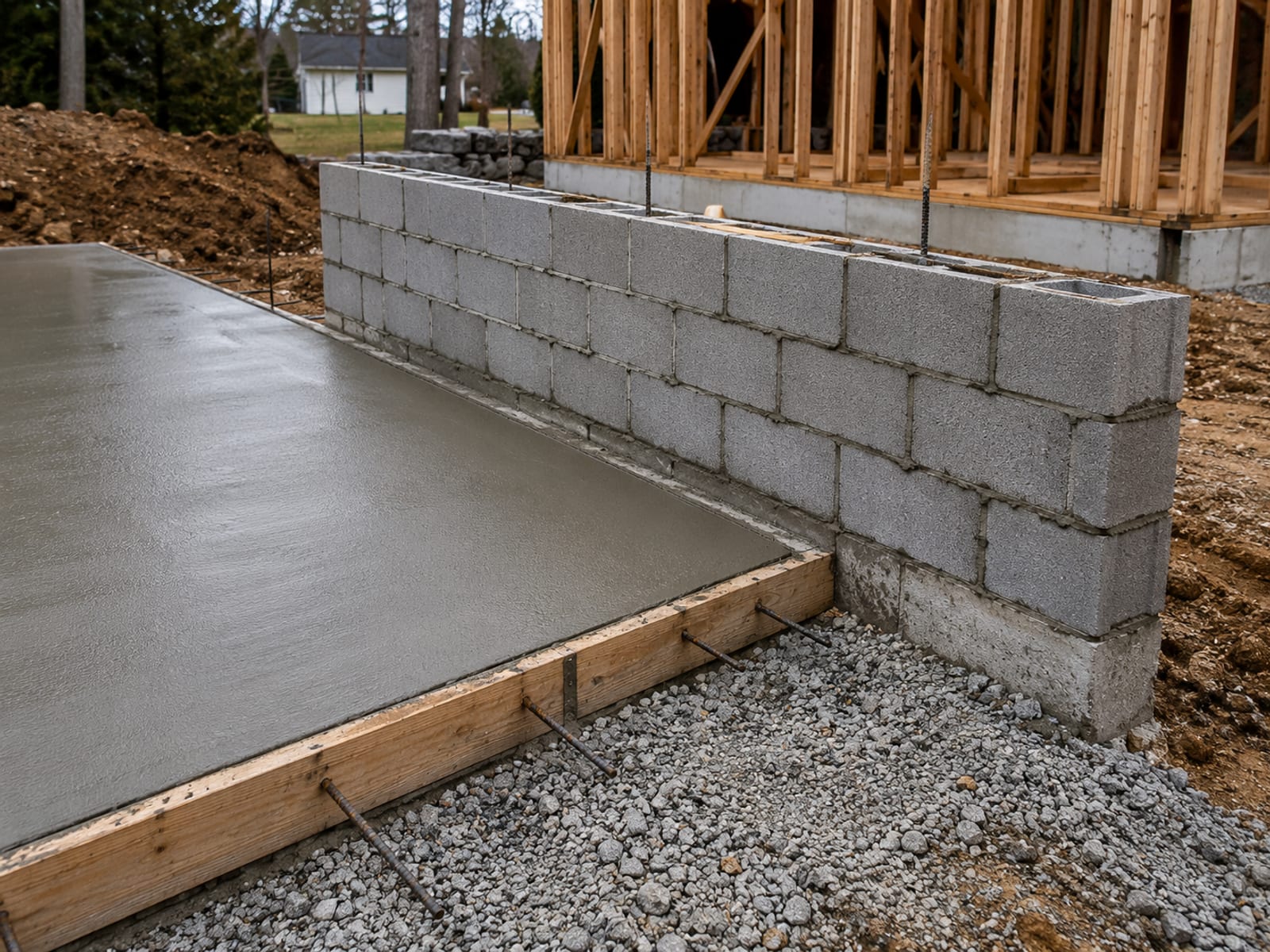
Freshly formed and poured concrete slab in progress beside a partially completed CMU block wall on a residential job site

What Types of Concrete and Masonry Work Does DLD Home Improvements Do?

DLD Home Improvements handles both new construction and repair work across concrete and masonry. The projects below represent the core scope of what the team takes on for commercial and residential clients.

Concrete Flatwork

Driveways, patios, sidewalks, aprons, and parking lot sections. New pours are formed, reinforced where needed, and finished to the specified surface texture. Damaged sections can be saw-cut and replaced rather than patching the whole slab.

Foundations and Footings

Concrete footings and foundation walls for additions, outbuildings, retaining structures, and commercial build-outs. Proper footing depth matters in this region, where frost lines require footings to be set well below grade to prevent seasonal movement.

Retaining Walls

Block, stone, or poured concrete retaining walls that hold grade changes in place, prevent erosion, and define usable space. Walls are built with proper drainage behind them to prevent hydrostatic pressure from pushing them out over time.

Concrete and Masonry Repair

Crack repair, spall patching, joint resealing, and structural tuck-pointing on brick or block. Catching deterioration early on a commercial property is far less expensive than a full replacement, and DLD Home Improvements can assess which approach makes sense for your situation.

Steps and Stoops

Concrete or masonry steps for residential and commercial entrances. Old precast steps that have settled or cracked can be replaced with poured-in-place concrete or block construction for a longer-lasting result.

Brick and Block Walls

New CMU block walls, brick walls, and stone walls for structural or aesthetic purposes. This includes garden walls, privacy walls, equipment screens, and low decorative borders on commercial properties.

Curbing and Edging

Poured concrete curbing for parking lots, landscape beds, and property borders. Curbing defines vehicle flow on commercial properties and protects landscaped areas from vehicle encroachment.

Masonry Veneer

Stone or brick veneer applied to exterior walls, columns, and entry features. Veneer gives commercial buildings and upscale residential properties a finished, durable exterior without the full cost of solid masonry construction.

Why Does Concrete and Masonry Quality Matter So Much for Commercial Properties?

For commercial property managers and building owners, concrete and masonry failures are rarely just cosmetic problems. A cracked parking lot apron creates a liability exposure if someone trips or a vehicle is damaged. A failing retaining wall near a loading dock or entrance can shut down part of your operation while repairs are made. Block walls built without proper drainage will bow and crack within a few seasons in the Northeast's freeze-thaw climate. These problems tend to get expensive fast.

The quality difference between solid work and a rushed job shows up within one or two winters. Mix ratios matter. Reinforcement placement matters. Compacted base material matters. A slab poured over poorly compacted fill will settle and crack no matter how good the surface finish looks on day one. DLD Home Improvements prepares the sub-base correctly before any concrete is placed, which is the part of the job most people never see and that separates work that holds up from work that doesn't.

Quality masonry work done correctly the first time will last decades with minimal upkeep. Substandard work done to hit a low bid price often needs patching within three to five years, and patching leads to more patching. Over a ten-year window, the cheaper job almost always costs more. DLD Home Improvements prices its work to be competitive, and the crew does not cut corners on materials or preparation to hit a number.

For facilities directors managing multiple sites across the region, having one contractor who handles both concrete and masonry across locations simplifies vendor management significantly. One point of contact, one consistent standard of work, and one contractor who already knows your properties. DLD Home Improvements works with multi-site commercial clients and can schedule projects across locations in a way that keeps operations running without major disruptions.

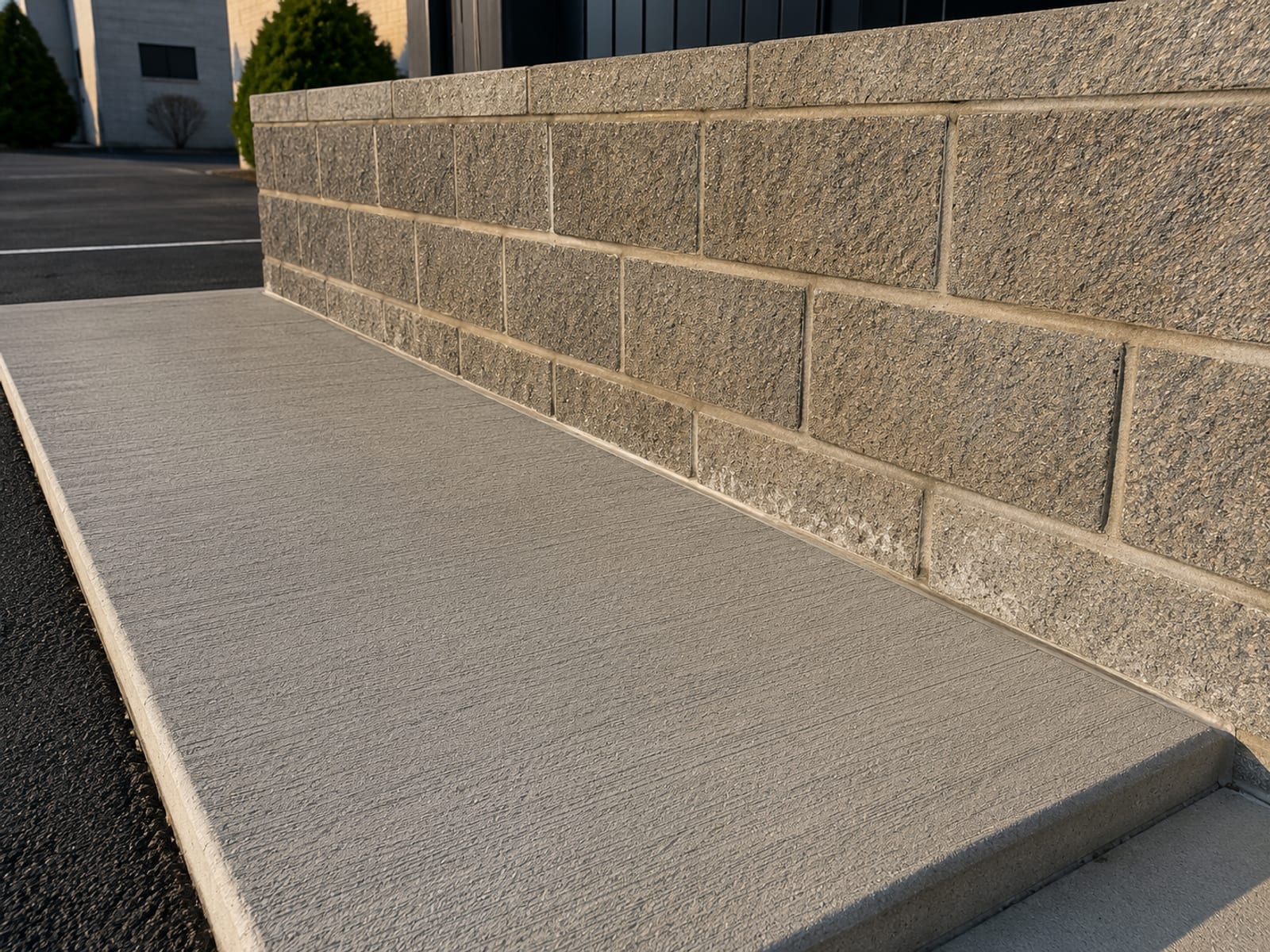
Close detail of a commercial parking lot concrete apron edge meeting a block retaining wall showing quality construction with no cracking or settlement

How Does the Concrete and Masonry Process Work?

Every concrete and masonry project with DLD Home Improvements follows a clear process from initial assessment through final cleanup.

  1. 1

    Site Assessment and Quote

    The process starts with a site visit and an honest conversation about what you need. For repair work, the crew looks at what's failing and why, not just the surface symptom. For new work, site conditions, drainage, soil, and access are assessed to make sure the design fits the location. You get a written quote with a clear scope of work before anything begins.

  2. 2

    Site Preparation

    This step determines how long the finished work lasts. Existing concrete or masonry being removed gets broken out and hauled away. Sub-base material is graded and compacted to the correct depth. For flatwork, forms are set and any required reinforcement, such as rebar or wire mesh, is placed before the pour. For masonry, footings are dug and poured to the proper depth for the frost line in your area.

  3. 3

    Concrete Pour or Masonry Installation

    Concrete is ordered at the correct mix design for the application, whether that's a standard residential slab or a higher-strength mix for commercial flatwork or structural use. For masonry projects, block, brick, or stone is laid to the specified coursing and alignment, with proper mortar joint thickness and tooling. Work proceeds in sections on larger projects to manage quality control throughout the pour or build.

  4. 4

    Finishing and Curing

    Concrete is finished to the specified texture, whether smooth, broom-finished, exposed aggregate, or stamped, depending on the project. Proper curing time is respected before the surface is opened to foot or vehicle traffic. Skipping or shortening the curing period is one of the most common causes of premature surface cracking and scaling, and it is a shortcut DLD Home Improvements does not take.

  5. 5

    Final Inspection and Cleanup

    Once the work is complete and cured, the site is cleaned up and the finished product is walked through with you. Any concerns are addressed before the job is considered closed. Concrete debris, form lumber, and leftover materials are removed from the property so you are not left managing disposal on your own.

Why Should You Work With DLD Home Improvements on Concrete and Masonry?

DLD Home Improvements is licensed and insured, and the crew operates with a standard of work that commercial clients and residential homeowners across the region have come to rely on. The difference comes down to how the work is done, whether the crew shows up when scheduled, and whether you can reach someone if an issue comes up.

Full-Scope Work, One Crew

DLD Home Improvements handles concrete and masonry together, which means your project does not stall because a sub-trade did not show up. The crew manages the full scope from excavation through finished surface, keeping your project on schedule.

Commercial and Residential Experience

The crew works on commercial properties like parking facilities, retail sites, and office buildings as well as residential driveways, patios, and foundations. That range of experience means the team understands both the production pace commercial clients need and the attention to finish quality residential clients expect.

Honest Assessment, Not Upselling

When you call DLD Home Improvements about a cracked sidewalk or a deteriorating retaining wall, you get an honest assessment of whether you need a repair or a replacement, not a default recommendation for the more expensive option. Some situations call for targeted repair, and that is what you will be told.

Multi-Site Scheduling

For property managers and facilities directors running multiple locations, DLD Home Improvements can plan and sequence work across sites in the region. That means less time coordinating separate contractors and more consistent results across your portfolio.

Clean Jobsite Practice

Concrete work generates a lot of waste, including broken-out material, form boards, and debris. DLD Home Improvements cleans up thoroughly at the end of every job, including hauling away concrete rubble. If your project also generates bulk waste that needs removal, that can be handled as part of the same service relationship.

Built for This Region's Climate

Contractors working in this region deal with frost heave, salt damage, and drainage challenges that contractors in milder climates simply do not encounter. The work DLD Home Improvements does is built for what this region actually puts concrete and masonry through.

Concrete and Masonry Projects Scoped to What You Actually Need

Not every concrete or masonry project looks the same. The approach that makes sense for a cracked residential driveway is different from what a commercial property manager needs for a failing loading dock apron or a deteriorating block retaining wall at the edge of a parking lot. The common thread is getting the assessment right before any work begins.

For residential clients, common projects include new driveways, patio slabs, front stoops, garden walls, and foundation work for additions or detached structures. Finished appearance matters alongside structural performance, and working cleanly around the home is expected. DLD Home Improvements handles residential concrete and masonry with the same attention to quality and site care that commercial clients receive.

For commercial and multi-family property owners, priorities often shift toward durability, scheduling around operations, and managing costs across a maintenance budget. A parking lot section that has been patched too many times may be a candidate for a full-panel saw-cut removal and replacement rather than another patch. A block wall that has started to bow or crack near the base may need to be taken down and rebuilt with proper drainage from the ground up rather than patched at the surface. DLD Home Improvements gives those assessments based on what the site actually shows, not on what generates the largest invoice.

For facilities directors overseeing multiple properties in the region, concrete and masonry maintenance is an ongoing line item, not a one-time event. Working with a single contractor who knows your properties, understands your budget cycles, and can plan preventive work before failures become emergencies is a practical way to manage that line item more predictably. DLD Home Improvements builds those kinds of working relationships with commercial clients and shows up consistently to maintain them.

Frequently Asked Questions About Concrete and Masonry

Concrete and masonry projects raise specific questions, especially for property managers and homeowners who have not done this type of work before. These answers cover details that often do not come up until after a project has already started.

For standard residential driveways, concrete needs at least seven days before regular vehicle traffic is allowed, and a full 28 days to reach its design strength. Heavy vehicles like delivery trucks or garbage trucks should stay off new concrete for at least 28 days. Cold weather slows the curing process, so projects poured in fall or early spring may need additional precautions like insulating blankets to prevent freezing before the concrete gains adequate strength.

Concrete always develops some cracking over time because it expands and contracts with temperature changes. The goal of proper installation is to control where and how it cracks. This is done through control joints, which are saw-cut or tooled grooves that give the slab a predetermined weak point so cracks follow the joint instead of running randomly across the surface. A well-installed slab with proper joint spacing, adequate base compaction, and correct mix design will crack far less than a slab installed with shortcuts.

In this region, footings for any structural element, including retaining walls over a certain height and building foundations, need to extend below the frost line to prevent seasonal heaving. The frost line depth varies by location, but in most of CT, western MA, and Albany NY, that means footings set at 42 to 48 inches below grade or deeper depending on local code. DLD Home Improvements confirms the required depth for your specific location and project type before any footing is poured.

Repointing means removing deteriorated mortar from brick or block joints and replacing it with new mortar to restore weather resistance and structural integrity. Tuckpointing is a more specific technique where two different colors of mortar are used, one to fill the joint and a thin contrasting line to create the appearance of very fine joints. In common use, most people use the terms interchangeably to mean mortar joint repair. Either way, the repair should be done before water infiltration causes the brick or block itself to deteriorate.

Concrete can be poured in cold weather, but it requires specific precautions to keep the mix from freezing before it gains adequate strength. This typically involves heating the water and aggregates used in the mix, using accelerating admixtures, and protecting the finished slab with insulating blankets after placement. Concrete should never be poured on frozen ground. DLD Home Improvements evaluates weather conditions carefully and will advise when conditions are suitable or when a pour should be rescheduled to protect the quality of the finished work.

Water pressure behind a retaining wall is one of the main reasons walls fail. A properly built retaining wall includes drainage aggregate, typically crushed stone, placed behind the wall, along with drainage pipe at the base and weep holes or open head joints in the lower courses to allow water to escape. Without these elements, hydrostatic pressure builds up during heavy rain or snowmelt and pushes the wall out of alignment. Wall drainage is included on every retaining structure DLD Home Improvements builds.

Permit requirements vary by municipality across CT, western MA, and Albany NY. In many cases, replacing an existing driveway in the same footprint does not require a permit, but new driveways, significant expansions, or retaining walls above a certain height typically do. DLD Home Improvements can advise on whether your specific project is likely to require a permit in your area. Pulling required permits protects you as the property owner and keeps the work compliant with local building codes.

Get Started

Ready to talk about your project?

Call or email DLD Home Improvements, or request an estimate. Available Monday through Friday and weekends, 8 AM to 8 PM, with emergency service when you need it.