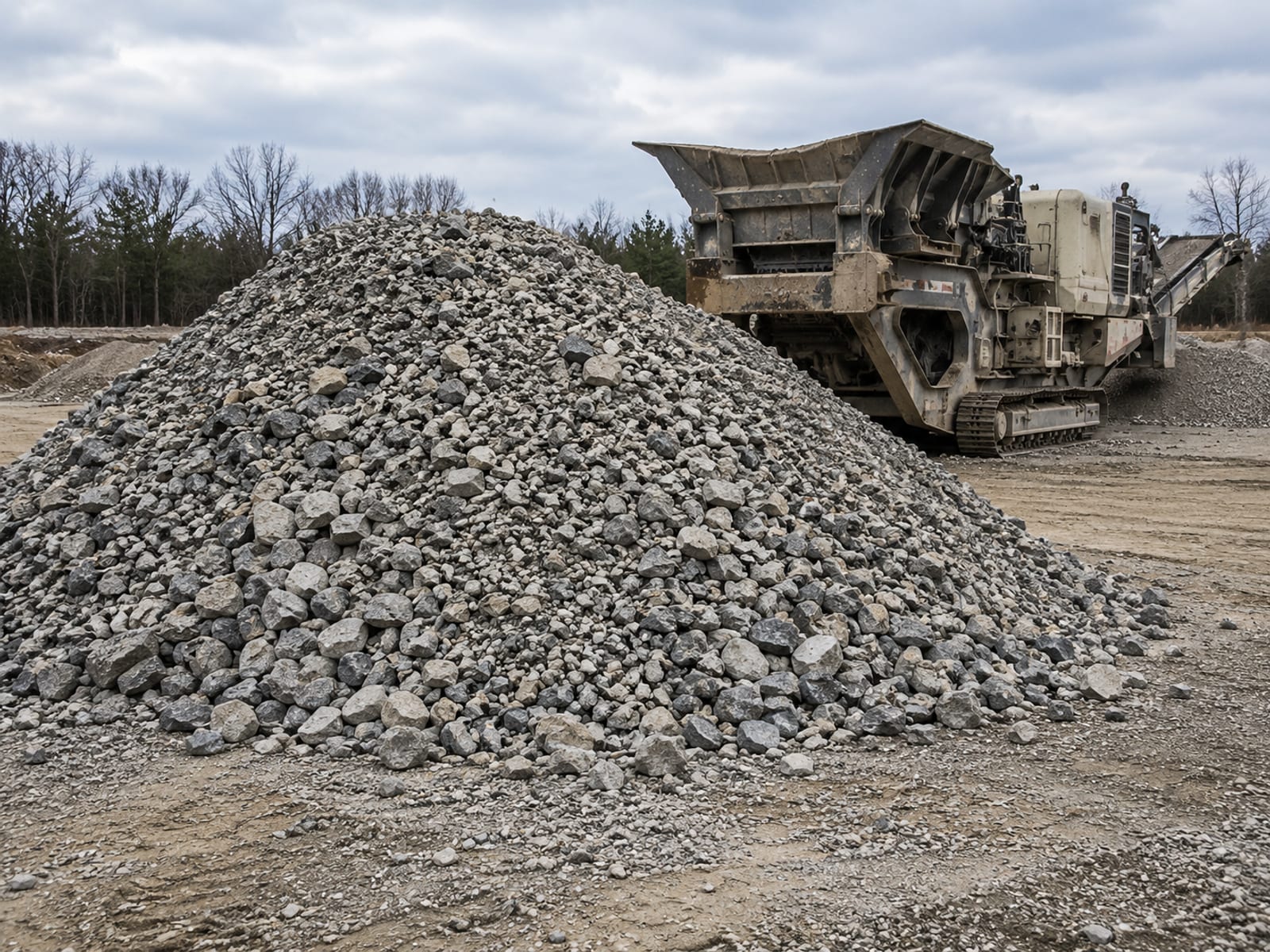
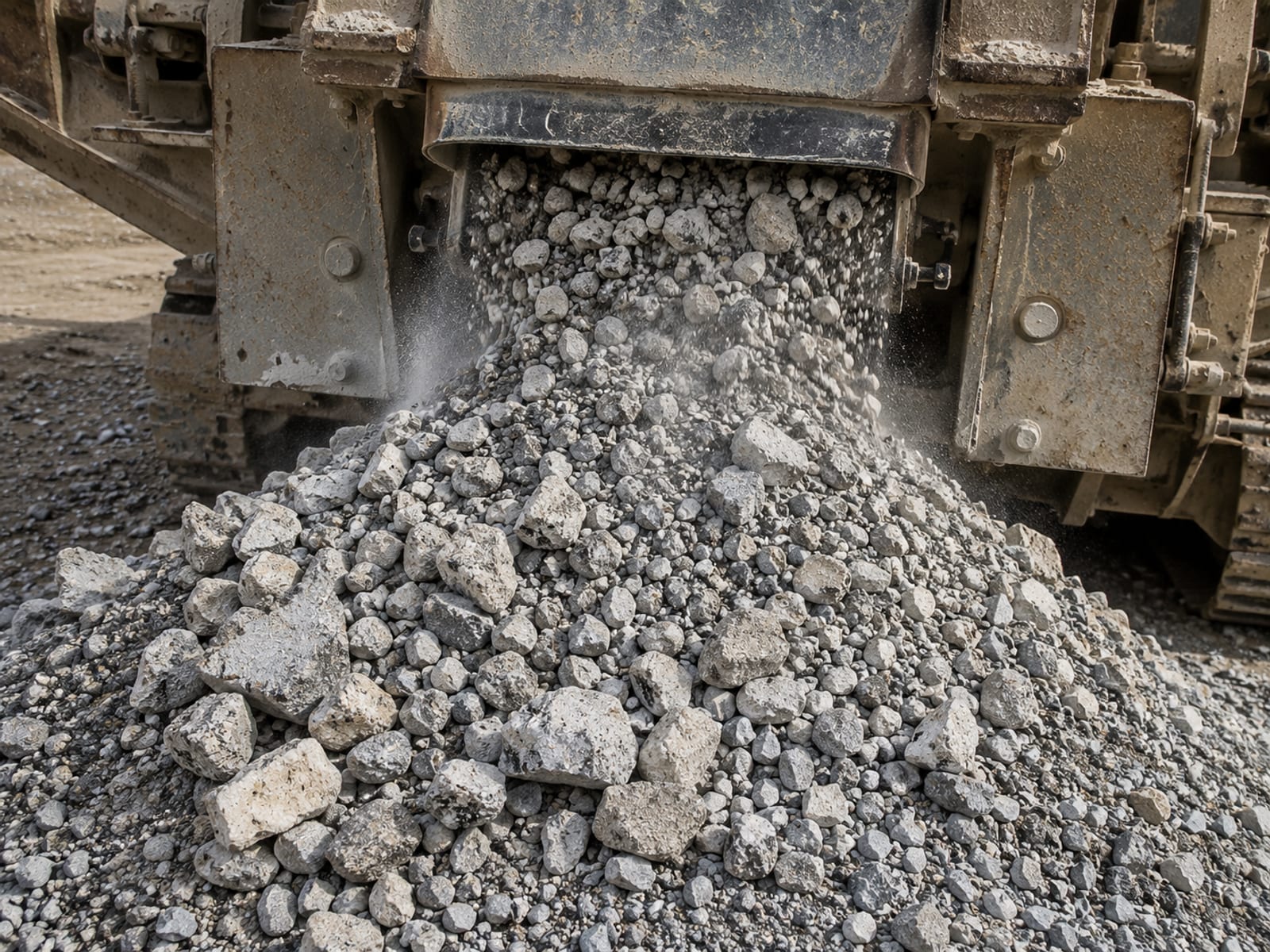
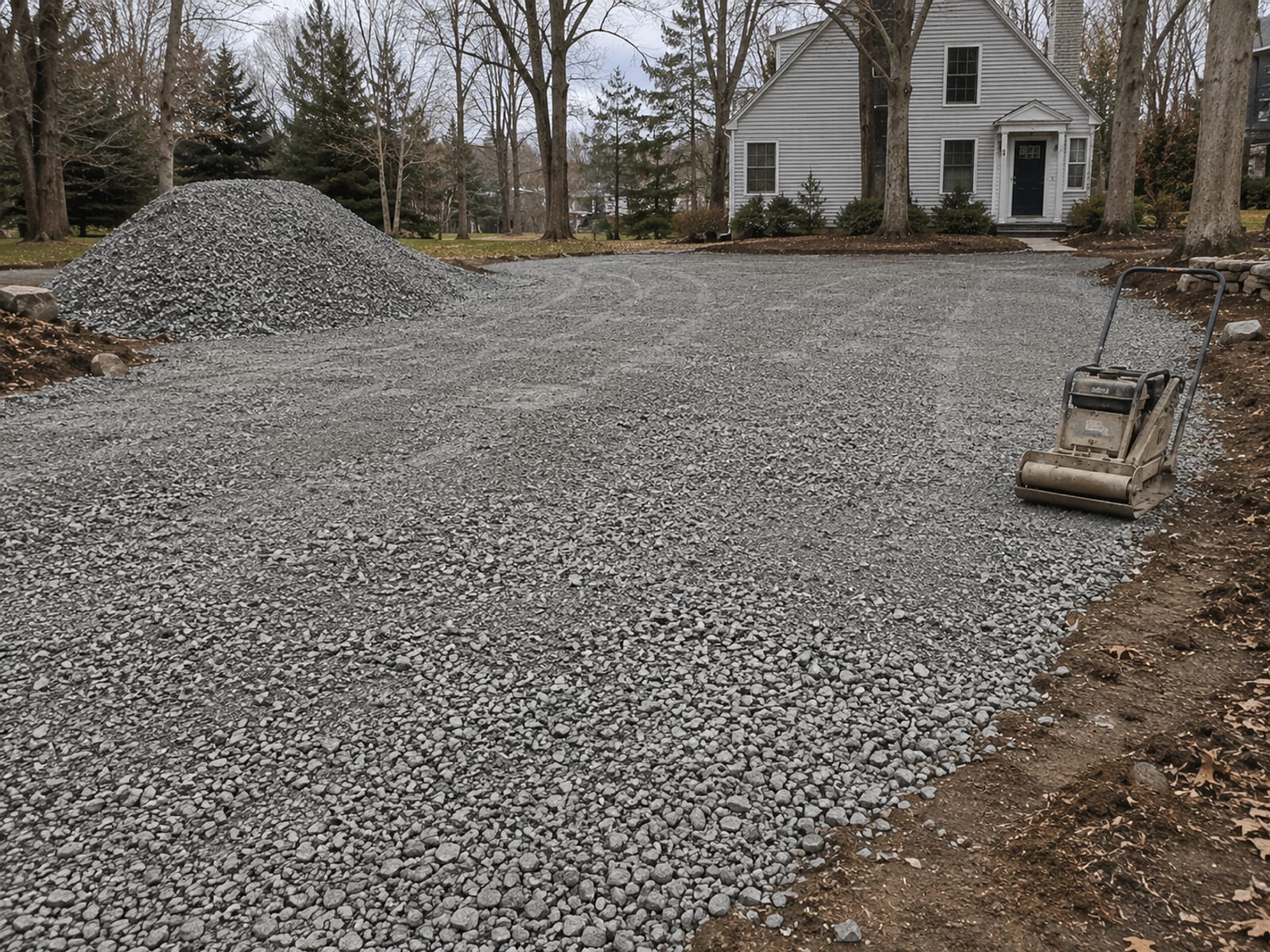
Stone crushing fits a wide range of project types, and the application usually determines what size and type of aggregate you need at the end. Road base and driveway construction are the most common applications. A well-graded crushed stone base under asphalt or concrete provides stable, compactable support that holds up under traffic and seasonal freeze-thaw cycles, which are a real consideration across the region.
Drainage projects also rely heavily on crushed stone. French drains, dry wells, and stormwater management systems depend on a clean, properly sized aggregate that lets water flow through freely. When you are managing a commercial property or a multi-unit residential site, drainage failures are expensive. Having the right crushed aggregate available on site, processed to the correct gradation, takes one variable out of the equation.
Demolition and renovation projects generate a significant volume of concrete and masonry that would otherwise go to a transfer station. Crushing that material produces a recycled aggregate that meets sub-base and fill requirements for many applications. This is increasingly relevant as more contractors in the region look for ways to manage waste responsibly, particularly on commercial build-out and renovation projects where debris volume is high.
Landscaping and site grading work also use crushed stone regularly. Gravel pathways, retaining wall backfill, slope stabilization, and decorative stone applications all call for processed aggregate. DLD Home Improvements handles stone crushing as part of a broader site scope, so you are working with one contractor across multiple phases of the project rather than coordinating separate vendors for each material need.