Skip to content
DLD Home Improvements

Services

Commercial Door Installation in CT, Springfield MA & Albany NY

DLD Home Improvements installs commercial doors for businesses, property managers, and facilities teams across Connecticut, Massachusetts, and New York. From entry systems to fire-rated assemblies, we handle the full installation from frame to hardware.

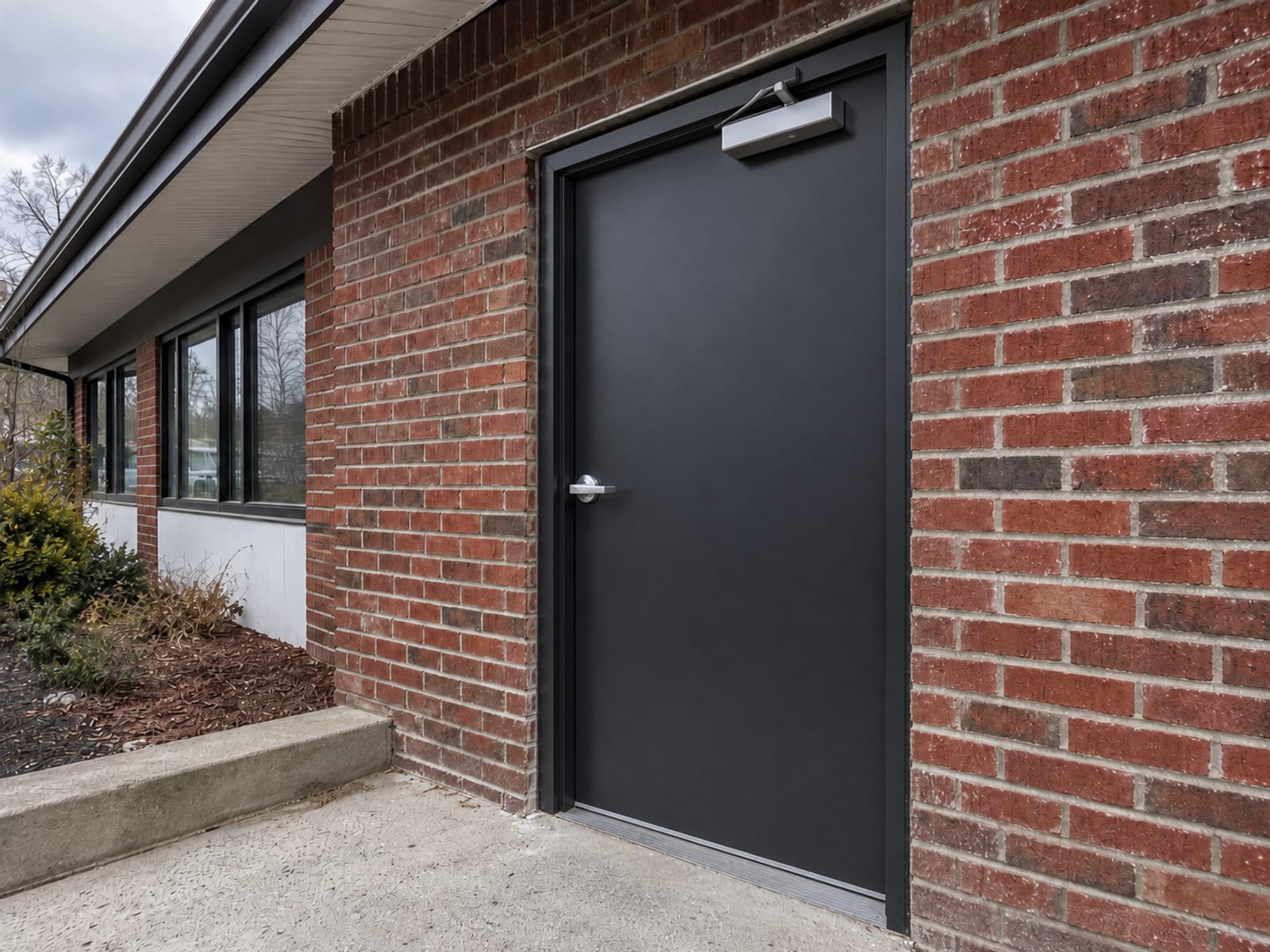
Heavy-duty steel commercial entry door installed in a brick-faced New England office building exterior

What Commercial Door Installation Covers

Commercial door installation means supplying and fitting a complete door system for a business or commercial property. That includes the slab, frame, hinges, lockset, door closer, and all associated hardware, delivered and installed as one coordinated package. DLD Home Improvements works with property managers, building owners, and facilities directors across the service area who need the job done right the first time, without scheduling headaches or code problems on the back end.

The scope varies by building type and use case. A retail storefront has different entry needs than a warehouse, a multi-tenant office building, or a healthcare facility. DLD Home Improvements installs interior and exterior commercial doors across all those settings, and the work includes bringing the installation into compliance with ADA requirements, local building codes, and any fire-rated assembly standards that apply to your specific property.

ADA compliance alone involves specific measurements that cannot be eyeballed. The door must provide at least 32 inches of clear width when opened to 90 degrees, the frame must clear a minimum height of 80 inches, and all hardware must be operable with one hand, mounted no higher than 48 inches from the floor. These are federal requirements that apply to every commercial door on an accessible route. Getting them wrong creates liability. Getting them right from the start is exactly what this service is for.
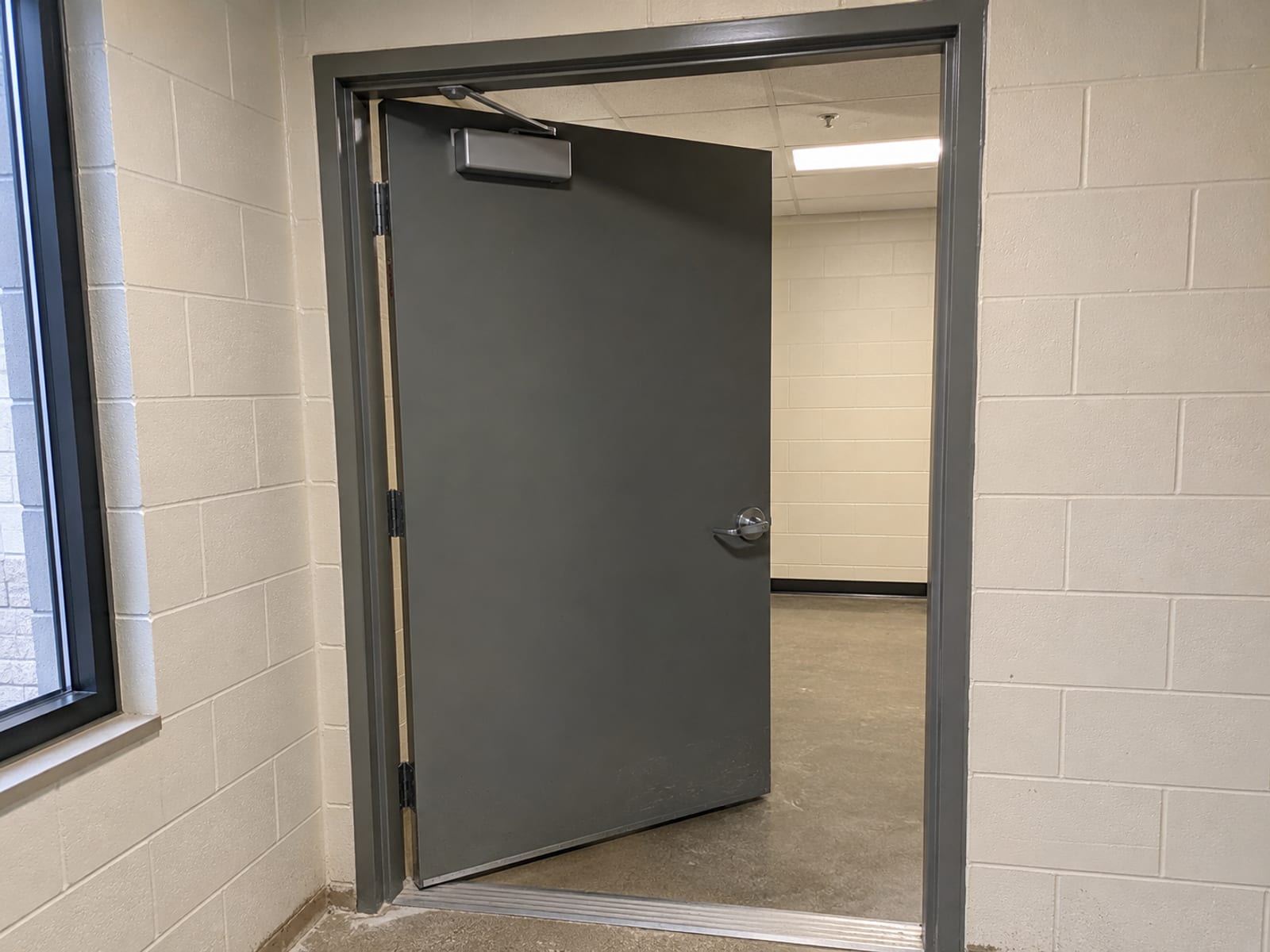
Close view of a commercial door frame installation showing a shimmed steel frame, surface closer, and lever lockset hardware

What Types of Commercial Doors Does DLD Home Improvements Install?

Commercial properties need different door types depending on the function of the space, the traffic volume, and the security or code requirements. DLD Home Improvements installs the following door types for businesses across the service area.

Sectional Overhead Doors

The most widely installed commercial door type, sectional overhead doors are the standard for warehouses, loading docks, and retail back-of-house areas. They run on a track system, open vertically, and take up minimal floor space. Their insulated panel construction also helps with climate control in temperature-sensitive spaces.

Steel Entry Doors

Heavy-duty steel entry doors are the go-to for building entrances, stairwells, and utility rooms where security and durability come first. They pair with commercial-grade locksets and closers, and they hold up against heavy daily use without warping or weathering the way lighter materials do.

Fire-Rated Door Assemblies

Any door in a fire-rated wall or corridor must be tested and labeled accordingly. Fire-rated assemblies require specific hardware, frames, and closing mechanisms that meet the rating, along with annual inspection by the property owner under code. DLD Home Improvements installs these assemblies to the correct rating for your building classification.

Glass Storefront Entrance Systems

Glass entrance doors create an open, professional look for retail, office, and mixed-use buildings. Modern commercial glass systems are built for strength and energy performance, and they work well alongside floor-to-ceiling window lines. These are installed as a complete system, not piece by piece.

Automatic and High-Speed Doors

Automatic doors are increasingly standard in commercial settings where traffic flow, accessibility, or hygiene are priorities. High-speed versions are common in industrial and food-service facilities where frequent access and climate separation both matter. These systems integrate with access control hardware and require precise installation to function safely.

Access-Controlled Entry Doors

Properties that need managed entry through keycards, fobs, or integrated building systems need doors and frames set up to support that hardware correctly. DLD Home Improvements installs the door assemblies and prepares them for access control integration, so the mechanical side of the installation is solid before electronics go in.

Why Commercial Door Installations Fail and How to Avoid It

Most commercial door problems trace back to installation errors, not product defects. A frame that is not plumb causes the door to bind or fail to latch. Hardware mounted at the wrong height creates an ADA violation. A fire-rated assembly installed with the wrong closer or incorrect frame voids the rating. These problems show up during inspections, insurance audits, and after incidents, and they come back on the property owner.

Building codes in Connecticut, Massachusetts, and New York each carry state-specific amendments layered on top of the International Building Code. New York City adds its own Construction Code requirements on top of state law, with specific provisions for fire-rated assemblies, egress hardware, and accessibility. What passes in one municipality may not pass in another. A contractor who does not know these differences can leave you with a door that looks fine but fails inspection.

The installation process matters more than most people expect. Proper commercial door installation means setting the frame plumb, level, and square in the rough opening using shims and anchoring it per code, then checking all three dimensions again before the door goes in. Hardware gets torqued to spec. The closer gets adjusted to close fully and latch without slamming. Every step in sequence prevents the problems that show up six months later when the door starts dragging or the latch stops catching.

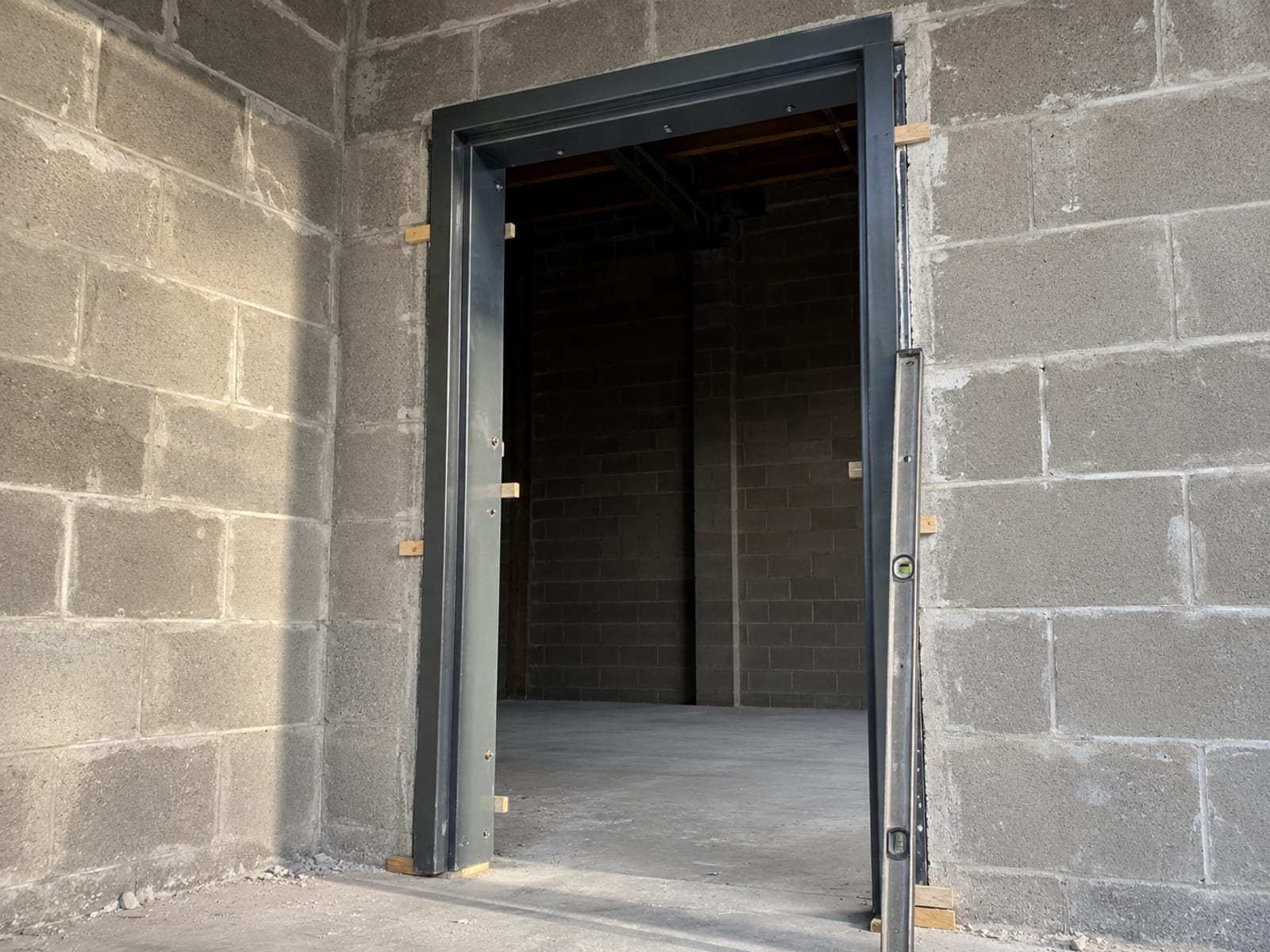
Detail of a steel commercial door frame set plumb in a masonry rough opening with visible shims and anchor points before finishing

How the Commercial Door Installation Process Works

DLD Home Improvements follows a structured process for every commercial door installation, from the first site visit through the final hardware check. No step gets skipped, because each one sets up the next.

  1. 1

    Site Assessment and Scope Definition

    Before any work starts, the team reviews the rough opening, the wall construction, the door's intended use, and the applicable code requirements for your building type and municipality. Fire-rating requirements, ADA measurements, and access control needs all get identified at this stage. The scope gets defined clearly so there are no surprises when the work begins.

  2. 2

    Door System Selection and Sourcing

    Based on the assessment, the right door system gets specified: the correct slab, frame, hardware, closer, and any additional components. Everything is coordinated as a package from one source. This prevents the mismatch problems that happen when components come from different suppliers and do not work together correctly.

  3. 3

    Frame Installation and Verification

    The frame goes into the rough opening using shims, anchored per the applicable building code. Level, plumb, and square all get checked on every side before moving forward. This step is the foundation of the entire installation, and any deviation here causes problems with door operation and hardware function down the line.

  4. 4

    Door Hanging and Hardware Mounting

    The door slab goes in, hinges are set, and the door is checked for proper swing and clearance. Hardware, including the lockset, latch, and any ADA-required components, gets mounted at the correct heights and torqued to specification. The door closer is installed and adjusted so the door closes fully and latches reliably under normal conditions.

  5. 5

    Final Walk-Through and Compliance Check

    The completed installation gets walked through against the scope and applicable code requirements. Clear width, hardware height, latch function, closer speed, and any fire-rating assembly requirements all get verified. Any adjustments happen before the job is called complete, not after you call back with a problem.

What Makes Commercial Door Work Harder Than It Looks

Commercial door installation is not the same job as hanging a residential door. The frames are heavier, the hardware is more complex, and the code requirements are significantly more specific. A standard commercial door frame needs to be anchored into the structural elements of the wall, not just fastened to drywall or wood blocking. The closer alone has multiple adjustment points that affect how the door behaves in different temperatures, wind conditions, and traffic scenarios.

Fire-rated assemblies add another layer. The door slab, the frame, and every piece of hardware on a fire-rated opening must all be listed components that are part of an approved assembly. You cannot mix and match. A rated door in a non-rated frame fails. The wrong closer on a rated door voids the rating. Annual inspection is required under code, and any deficiency found during that inspection needs to be corrected immediately. DLD Home Improvements installs these assemblies to spec so the annual inspection is a routine confirmation, not a list of problems.

The shift toward access control integration adds complexity that did not exist in older installations. Doors that support keycard or biometric entry need frames prepped for electric strikes or magnetic locks, conduit runs for wiring, and power transfer hinges in some cases. Getting the mechanical installation right is the prerequisite for any electronic system to function properly. DLD Home Improvements handles the door and frame side of this work correctly, so the integration point is solid.

Who This Service Is Built For

DLD Home Improvements works primarily with commercial clients who need a contractor that understands the requirements of the job and can coordinate across multiple sites when needed.

Property Managers

If you manage multiple commercial properties across the region, you need a contractor who can work across your portfolio without needing hand-holding on every visit. DLD Home Improvements handles the assessment, the code research, and the installation, and communicates clearly so you are not chasing updates.

Building Owners

Whether you own a single commercial building or a small portfolio, a failed or non-compliant door creates liability you do not want. ADA violations, failed fire door inspections, and egress issues all come back on ownership. Getting the installation right the first time is the lower-cost path.

Facilities Directors

Facilities teams often need commercial door work on a timeline that does not accommodate delays. DLD Home Improvements is licensed and insured, works to code, and can manage the full scope from frame to hardware without requiring the facilities team to source separate contractors for different parts of the job.

Business Owners with Commercial Space

Opening a new location, renovating an existing space, or replacing a failing door in an active business all require a contractor who can work efficiently without creating extended disruptions. DLD Home Improvements has worked on commercial build-outs and renovation projects across the service area and knows how to manage the installation around your operation.

Why DLD Home Improvements for Commercial Door Work in CT, MA, and NY

DLD Home Improvements is a licensed and insured general contractor serving Connecticut, Springfield MA, and Albany NY. Commercial door installation sits within a broader scope of commercial services that includes carpentry, commercial build-outs, flooring, concrete and masonry, and more. That means the team understands how a door installation connects to the surrounding structure, and problems that show up in the frame or wall during a door job do not become a separate project for a separate contractor.

Working across the region means DLD Home Improvements has practical experience with the different code environments in each state. Connecticut, Massachusetts, and New York each have their own amendments to the base building code, and New York City layers additional requirements on top of state law. Knowing which rules apply where is not something you want to learn on your job site.

The service area spans multiple markets, and commercial clients with properties in more than one location can work with a single contractor they already know rather than vetting new ones in each city. That consistency matters when you are coordinating multiple properties and need predictable results.

Frequently Asked Questions About Commercial Door Installation

These questions address specifics that come up often when planning a commercial door installation.

In most cases, replacing or installing a commercial door in an existing opening requires a permit, particularly when fire-rated assemblies, structural modifications, or egress doors are involved. The requirement varies by municipality and building type. Connecticut, Massachusetts, and New York each have state-level building codes, and local building departments often enforce stricter standards on top of those. DLD Home Improvements can work with you on identifying the permitting requirement for your specific property before the project begins.

ADA-compliant commercial doors on accessible routes must have a minimum clear opening width of 32 inches when the door is open to 90 degrees and a minimum frame height of 80 inches. All door hardware, including handles, latches, and locks, must be operable with one hand and without tight grasping or twisting, and must be mounted no higher than 48 inches from the floor. These requirements apply to any commercial door on an accessible route, regardless of building age, unless a specific exemption applies.

Fire-rated doors must be tested and inspected annually, and that responsibility falls on the property owner under the applicable fire code. The inspection covers the door slab condition, frame integrity, hardware function, self-closing and latching operation, and the condition of any seals or gaskets. Any deficiency found during inspection needs to be corrected promptly. Installing the assembly correctly from the start, using all listed components in the correct configuration, is what keeps annual inspections straightforward.

Yes, and the door and frame installation needs to be prepared for it correctly before any electronic components go in. This typically involves prepping the frame for an electric strike or magnetic lock, running conduit for wiring, and in some cases using power transfer hinges to pass low-voltage current to the door edge. DLD Home Improvements handles the mechanical installation side of this work, setting up the door assembly so the access control integration has a solid foundation to work from.

A complete commercial door system includes the door slab, the frame, hinges, a lockset with appropriate hardware, a door closer, and all associated fasteners and anchors. For fire-rated applications, it also includes listed seals, the correct rated closer, and a labeled frame and slab that are part of an approved assembly. Sourcing all components as a coordinated package from one supplier prevents the mismatch and compatibility problems that create installation failures or code violations.

High-speed and automatic doors involve motorized operating systems with sensors, control panels, and safety mechanisms that require precise setup and adjustment beyond standard door installation. High-speed doors are designed to open and close in seconds and are common in industrial, food-service, and warehouse settings where climate separation and workflow speed both matter. Automatic doors also need to meet ADA timing requirements for how long they stay open. The mechanical installation must be correct before any electronic calibration can happen effectively.

Ask whether the contractor is licensed and insured in your state, whether they pull permits when required, and whether they have experience with the specific door type and code requirements that apply to your building. For fire-rated assemblies, ask whether they install using fully listed components in approved configurations. For ADA-sensitive locations, ask how they verify compliance measurements before and after installation. Getting clear answers to these questions upfront separates contractors who know the work from those who are guessing.

Get a Quote for Commercial Door Installation

Call 959-759-0391 or email info@dldhomeimprovements.com to get started. Tell us about the property, the door type, and any code or access control requirements you are working with, and we will get back to you with a clear scope and timeline.

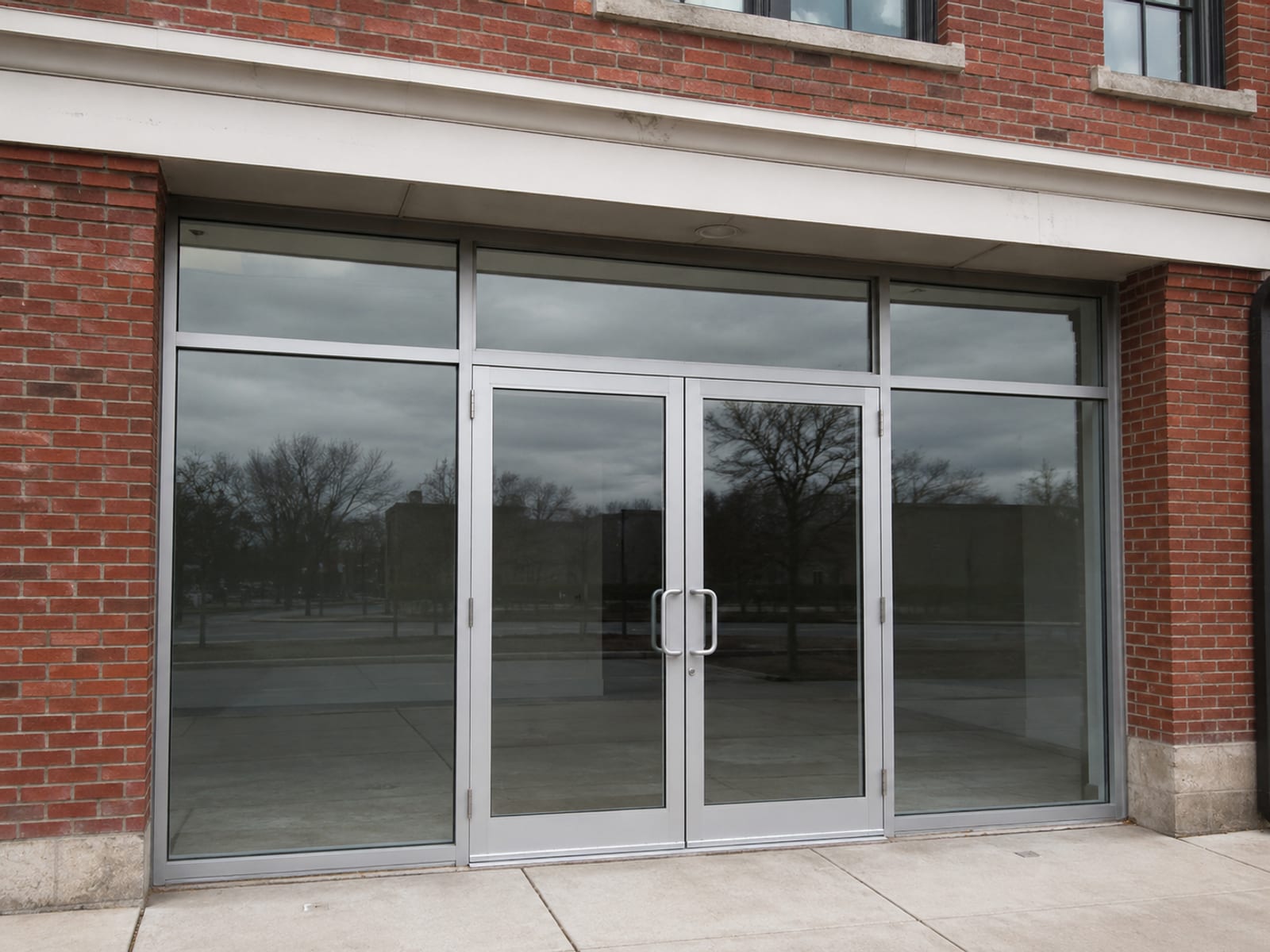
Finished commercial glass storefront entrance door system installed in a New England retail or mixed-use building exterior

Get Started

Ready to talk about your project?

Call or email DLD Home Improvements, or request an estimate. Available Monday through Friday and weekends, 8 AM to 8 PM, with emergency service when you need it.