The commercial construction market has shifted noticeably over the past few years. Office-to-residential conversions are accelerating in NYC, with nearly 9.5 million square feet of conversion projects planned for 2026 alone. Landlords in Boston are competing harder for tenants in a softer office market, which means tenant improvement packages are getting more complex and the construction quality bar is rising. Property owners and managers can't afford a contractor who shows up unprepared.
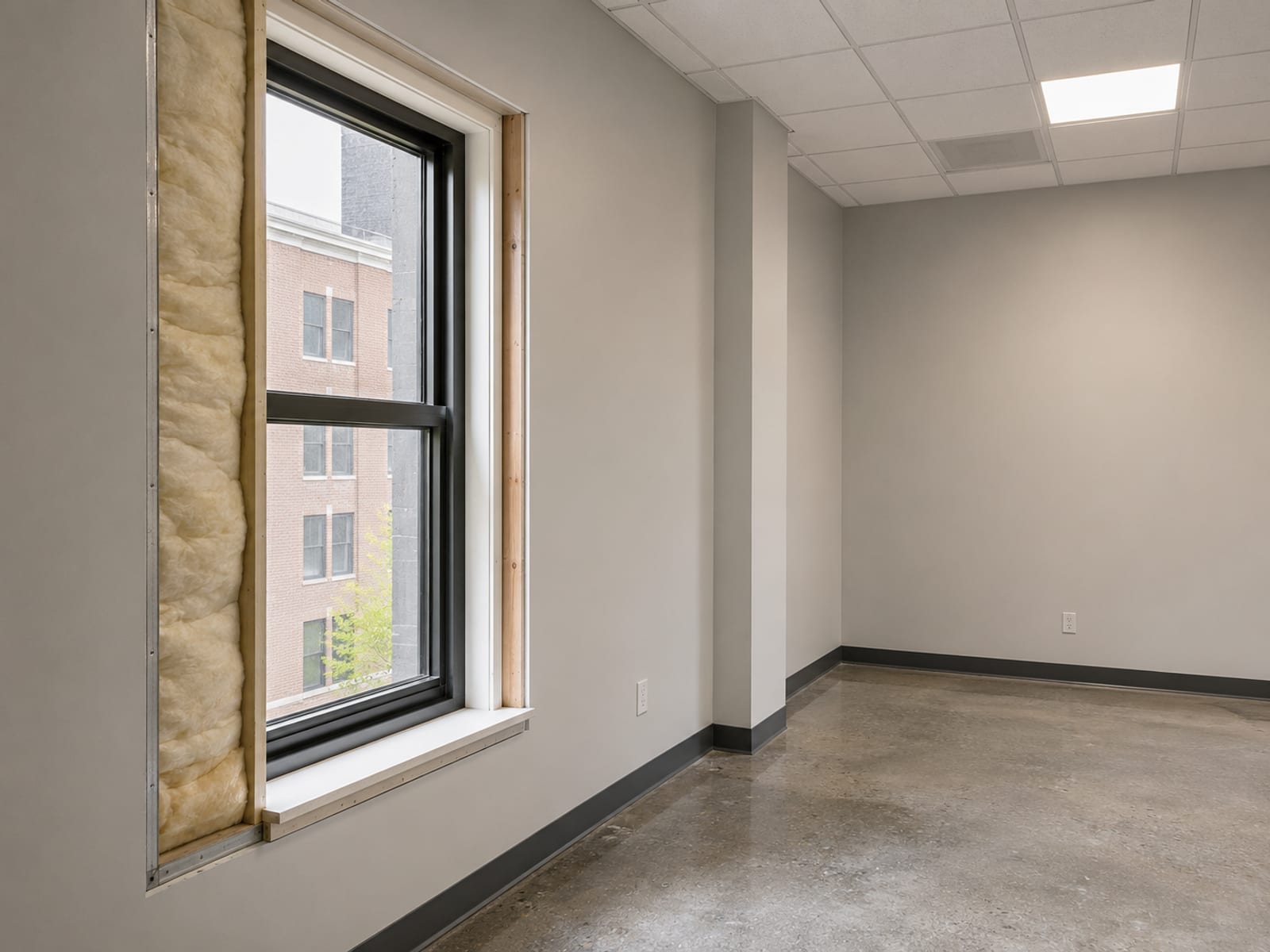
Energy codes are also tightening across all three states. New York adopted updated energy conservation requirements in July 2025, incorporating ASHRAE 90.1-2022 standards with enhanced building envelope requirements. Massachusetts updated its Stretch and Specialized energy codes in early 2025. Connecticut is working through 2024 IECC adoption. What this means practically is that commercial build-outs now need to account for thermal performance, lighting efficiency, and in some cases electrification readiness from the start, not as an afterthought.
There's also a real labor shortage working against timelines. Contractors across the region are struggling to staff projects, which pushes out completion dates and drives up costs for anyone who waits too long to get a crew scheduled. Getting a committed, experienced contractor lined up early is how you protect your opening date and your budget.
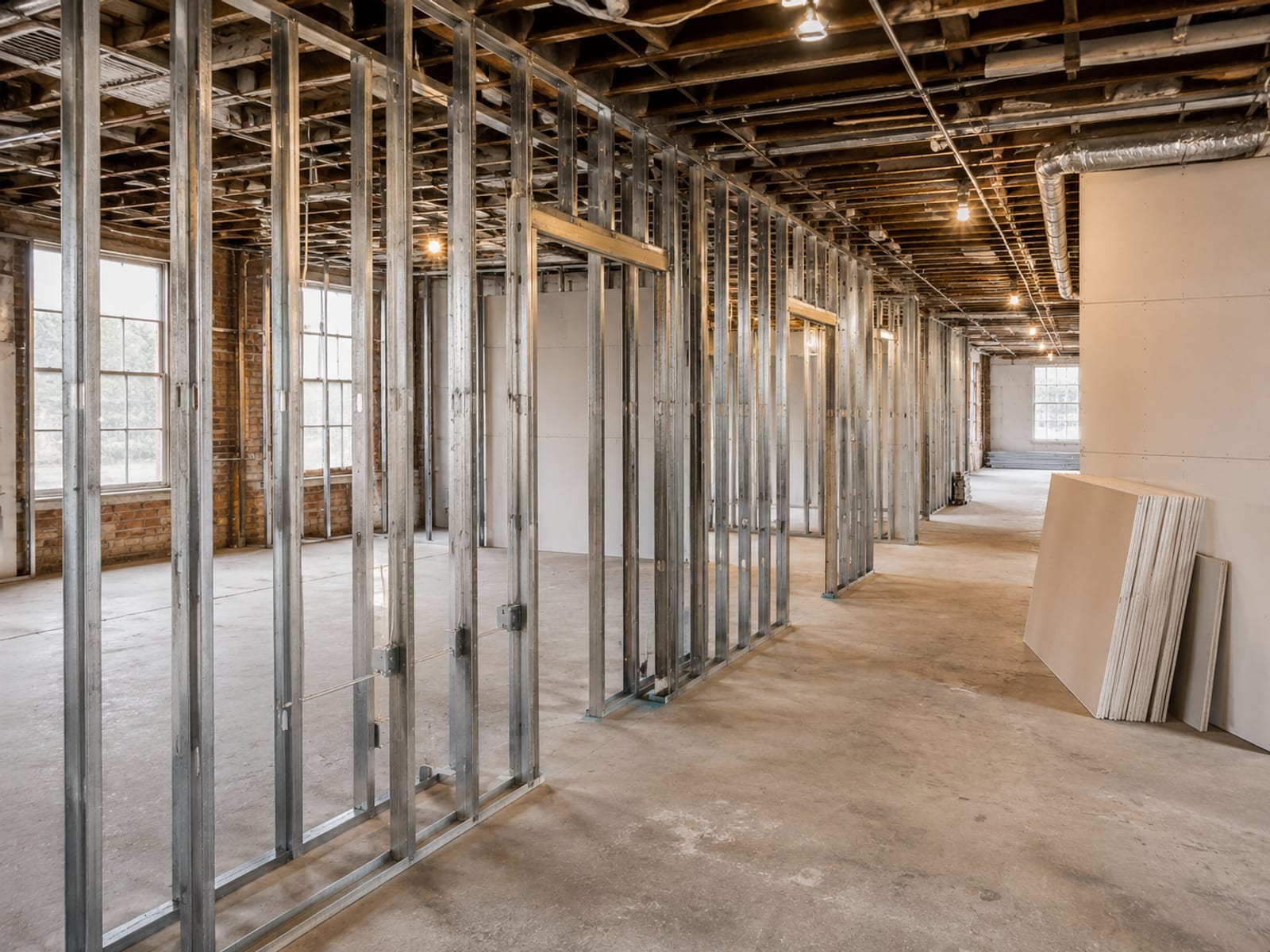
Older building stock adds another layer. A lot of commercial space in the region sits in buildings constructed decades ago, which means a build-out can surface unexpected conditions: undersized electrical panels, non-compliant framing, moisture issues in concrete slabs, or asbestos-containing materials in ceiling tiles or flooring adhesive. The way a contractor responds to those discoveries matters as much as their ability to do the planned work.
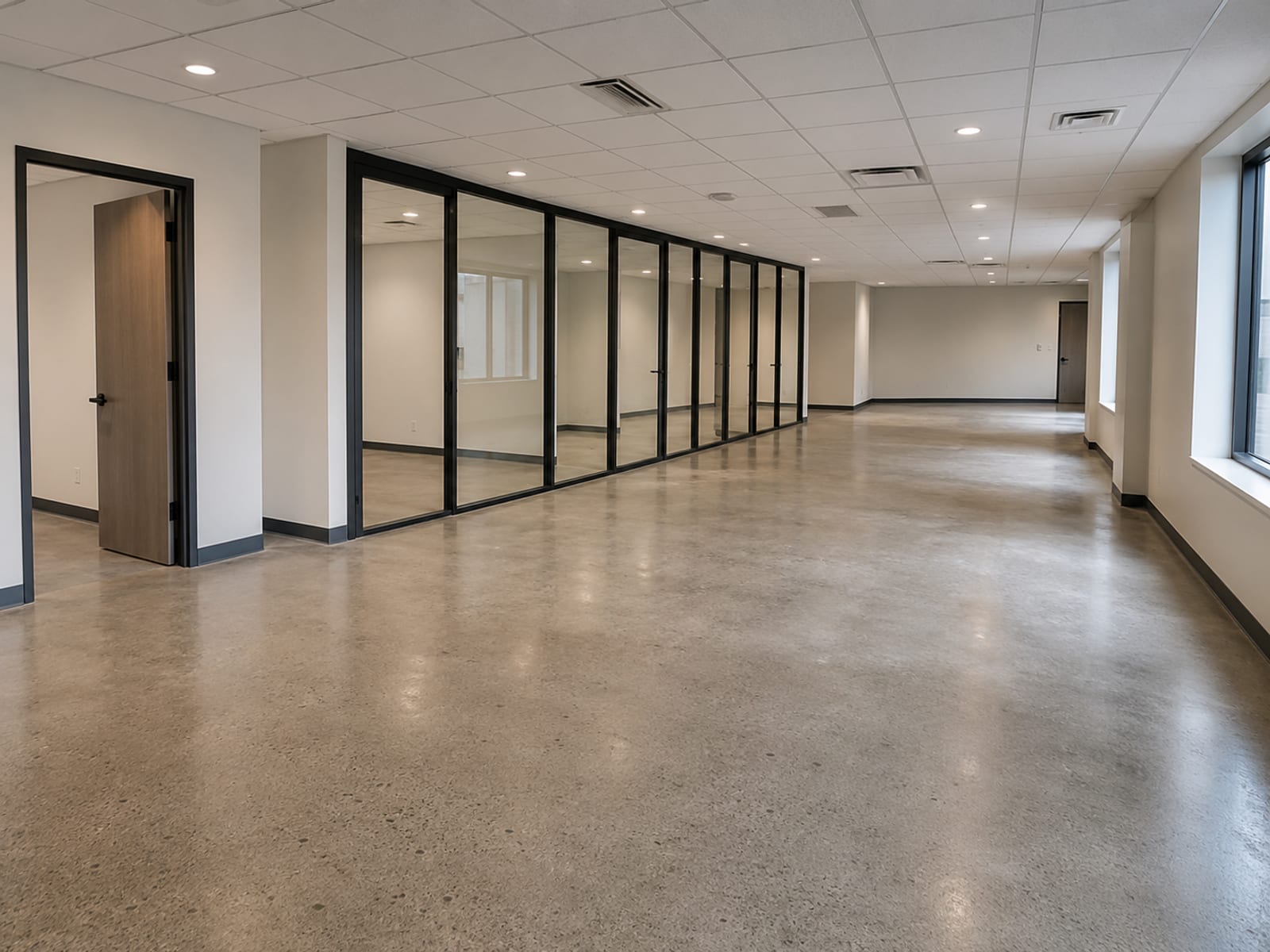
The hybrid work shift has also changed what tenants and business owners actually need from a commercial interior. Dedicated desk assignments are giving way to shared workstations and reservable collaboration rooms. That means more movable wall systems, more open floor plate work, and more attention to how the space flows rather than how many offices it contains. Build-outs today require more planning around flexibility than they did five years ago.
Cost pressure from materials is real too. Tariff uncertainty and supply chain variability have made some material categories harder to price confidently well in advance. A contractor who understands this and builds in reasonable lead times for procurement protects your timeline better than one who orders everything at the last minute.